Chemical composition
Nominal: mid-range where both limits are given, the cap where only a maximum is, balance takes the remainder. Exact specified ranges below.
| Element | Name | Content % | |
|---|---|---|---|
| Main elements6 elements | |||
| Co | Cobalt | 39 – 41% | |
| Cr | Chromium | 19 – 21% | |
| Ni | Nickel | 14 – 16% | |
| Fe | Iron | Bal. | |
| Mo | Molybdenum | 6 – 8% | |
| Mn | Manganese | 1.5 – 2.5% | |
| Element | Name | Content % | |
|---|---|---|---|
| Minor & residual5 elements | |||
| C | Carbon | ≤ 0.15% | |
| Be | Beryllium | ≤ 0.1% | |
| Si | Silicon | ≤ 1.2% | |
| P | Phosphorus | ≤ 0.015% | |
| S | Sulphur | ≤ 0.015% | |
Mechanical minima by form
Guaranteed values differ by form, size and delivery condition; quotations confirm the specification, form, size and condition.
| Form | Condition | Rm MPa | Rp0.2 MPa | A ≥ % | Other requirements and notes |
|---|---|---|---|---|---|
| Plate, sheet and strip | |||||
| Cold-worked and aged strip (medical Grade 1) | Cold worked and aged, thickness over 1.88 up to 2.50 mm | ≥ 1170 (170 ksi) | ≥ 690 (100 ksi) | ≥ 17 | |
| Wire and filler metals | |||||
| Round wire | Solution heat treated (1177 ± 14 °C) then cold drawn, supplied not aged; dia. over 2.54 up to 3.56 mm | ≥ 1517 (220 ksi) | — | — | |
| Round wire — response to ageing | Solution treated and cold drawn, then 482–538 °C for 5–5.5 h, air cooled; dia. over 3.05 up to 3.56 mm | ≥ 1862 (270 ksi) | ≥ 1241 (180 ksi) | — | Also specified: Hardness ≥ 46 HRC |
| Round wire — response to ageing | Solution treated and cold drawn, then 482–538 °C for 5–5.5 h, air cooled; dia. over 0.13 up to 1.02 mm | ≥ 1999 (290 ksi) | ≥ 1448 (210 ksi) | — | Also specified: Hardness ≥ 46 HRC |
| Very fine round wire — response to ageing | Solution treated, cold drawn, then aged; dia. 0.03–0.13 mm | ≥ 2275 (330 ksi) | — | — | Also specified: Hardness ≥ 46 HRC |
| Cold-worked and aged wire (medical Grade 1) | Cold worked and aged, dia. over 3.00 up to 3.50 mm | ≥ 1860 (270 ksi) | ≥ 1240 (180 ksi) | — | |
| Several forms | |||||
| Annealed wire and strip (medical Grade 1) | Annealed | ≥ 850 (123 ksi) | ≥ 450 (65 ksi) | ≥ 65 | |
Where this grade is recommended
Matched in 1 service conditions; ranks and scores computed from the condition-scoring matrix.
| Service condition | Industry | Temperature | Rank | Score |
|---|---|---|---|---|
| Guidewires & implant wire | Medical Devices | In-body (37 °C) | 2 / 5 | 90 |
Designations & equivalents
| Trade name(s) | Elgiloy / Phynox / Conichrome / Cobalt-spring |
| GOST (Russia) | ≈ 40КХНМ |
Phynox and Elgiloy are different grades and are not interchangeable — state the grade and the standard on the order.
More detail 2
Phynox is ASTM F1058 Grade 2 (UNS R30008); its nickel, chromium, molybdenum and manganese ranges all differ from Grade 1 (Elgiloy, UNS R30003).
The data on this page are for Elgiloy; if 3J21 must be accepted to the Chinese standard, say so in your enquiry.
Cross-references are common near-equivalents for search and shortlisting; substitution across standards requires clause-by-clause verification. All grades in one cross-reference table →
Applicable standards
5 specifications. Name the standard and its edition on the order.
To receive wire already aged by the mill, order AMS 5834; AMS 5833 wire is delivered unaged, and the aged strengths in that specification only show the response to ageing.
More detail 1
For medical devices order to ASTM F1058 Grade 1: it limits beryllium to 0.001 %, while AMS 5833 allows up to 0.10 %, so material that meets AMS 5833 does not necessarily meet the medical requirement.
Guaranteed values and required tests differ between specifications — see Mechanical minima by form for the figures per form.
Frequently asked questions
What is 3J21 Cobalt Elastic Alloy (Elgiloy class)?
3J21 Cobalt Elastic Alloy (Elgiloy class) — Precision alloys. Corrosion-resistant, non-magnetic, high-elastic cobalt alloy — medical springs, guidewires, mainsprings
What is the maximum service temperature of 3J21?
Typically about 427 °C; the practical limit depends on media, stress and design life — acceptance per the governing standard.
What is the tensile strength of 3J21?
The specified minimum tensile strength is 1862 MPa for the main product form. Minima for other forms and sizes are listed under "Mechanical minima by form" on this page.
Which standards cover 3J21?
AMS5833, AMS5834, AMS5876, ASTM F1058, ISO 5832-7
Where is 3J21 typically used?
Guidewires & implant wire (Medical Devices)
In which forms is 3J21 available?
Tube, plate, strip, bar, forgings, wire and other forms — sizes and delivery condition confirmed per order, with EN 10204 3.1 / 3.2 certification.
Same series
Download PDF datasheet
This grade’s datasheet as an A4 PDF — for filing, printing or forwarding to colleagues.
Download PDF datasheetSupply & enquiry
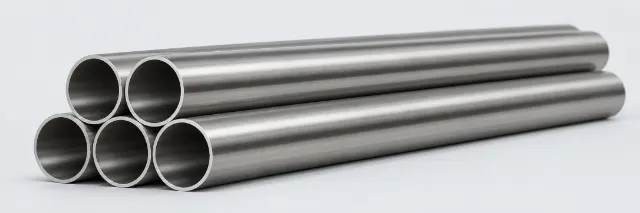 Tube & pipeφ1 – 219 × 0.25 – 25 mm
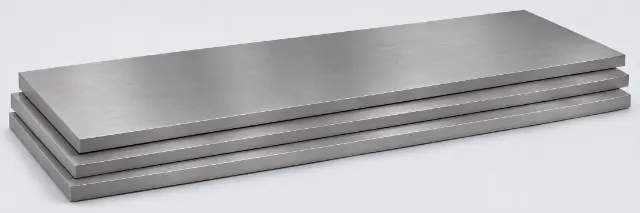 Plate4.76 – 80 mm
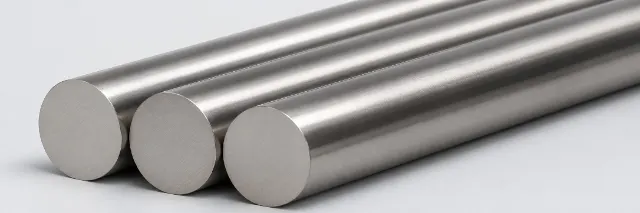 Barφ8 – 300 mm
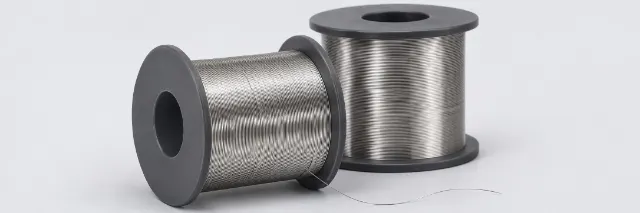 Wire & filler metalsφ0.01 – 8 mm
For this grade we can supply, against your service conditions:
- Tube, plate, strip, bar, forgings, wire and more — with size range and lead time
- Chemistry and mechanical test report (EN 10204 3.1 / 3.2)
- Like-for-like alternatives and selection advice
- Applicable standards and inspection scope
Or email us: info@kochlin.com