Physical properties
| Density | 7.9 | g/cm³ |
| Modulus E | 215 | GPa |
| Thermal conductivity | 11.3 | W/(m·K) |
| Thermal expansion | 13.5 | ×10⁻⁶/K |
| Specific heat | 0.45 | kJ/(kg·K) |
| Resistivity | 1.18 | Ω·mm²/m |
Informative values: they vary with composition, condition and test method. Use the governing standard or measured mill data for pressure and heat-transfer calculations.
Chemical composition
Nominal: mid-range where both limits are given, the cap where only a maximum is, balance takes the remainder. Exact specified ranges below.
| Element | Name | Content % | |
|---|---|---|---|
| Main elements8 elements | |||
| Ni | Nickel | Bal. | |
| Cr | Chromium | 24 – 26% | |
| Fe | Iron | 8 – 11% | |
| Al | Aluminium | 1.8 – 2.4% | |
| C | Carbon | 0.15 – 0.25% | |
| Ti | Titanium | 0.1 – 0.2% | |
| Y | Yttrium | 0.05 – 0.12% | |
| Zr | Zirconium | 0.01 – 0.1% | |
| Element | Name | Content % | |
|---|---|---|---|
| Minor & residual4 elements | |||
| Mn | Manganese | ≤ 0.15% | |
| Si | Silicon | ≤ 0.5% | |
| P | Phosphorus | ≤ 0.02% | |
| S | Sulphur | ≤ 0.01% | |
Mechanical minima by form
Guaranteed values differ by form, size and delivery condition; quotations confirm the specification, form, size and condition.
| Form | Condition | Rm MPa | Rp0.2 MPa | A ≥ % | Other requirements and notes |
|---|---|---|---|---|---|
| Bar and forgings | |||||
| Bar and rod | Annealed after cold working or after hot working | ≥ 680 (99 ksi) | ≥ 270 (39 ksi) | ≥ 30 | |
| Forgings, flanges, fittings and valve parts | Solution annealed, max section ≤102 mm | ≥ 680 (99 ksi) | ≥ 270 (39 ksi) | ≥ 30 | |
| Forgings, flanges, fittings and valve parts | Solution annealed, max section >102–305 mm | ≥ 580 (84 ksi) | ≥ 270 (39 ksi) | ≥ 15 | |
| Plate, sheet and strip | |||||
| Hot-rolled plate and sheet | Annealed | ≥ 680 (99 ksi) | ≥ 270 (39 ksi) | ≥ 30 | |
| Tube and pipe | |||||
| Seamless pipe and tube | Annealed after hot or cold working | ≥ 680 (99 ksi) | ≥ 270 (39 ksi) | ≥ 30 | |
| Electric-fusion-welded pipe | Annealed (≥1150 °C) | ≥ 680 (99 ksi) | ≥ 270 (39 ksi) | ≥ 30 | |
| Welded heat-exchanger and condenser tube | Annealed (Class 1 or Class 2 — see note) | ≥ 680 (99 ksi) | ≥ 270 (39 ksi) | ≥ 30 | Every piece is leak- or electrically tested (hydrostatic, pneumatic, eddy current or ultrasonic). Flattening and flange tests required. |
| Welded pipe (no filler metal) | Automatic welded, cold worked after welding, final heat treated (Category 1 or 2) | ≥ 680 (99 ksi) | ≥ 270 (39 ksi) | ≥ 30 | Flattening test required. Every piece is leak- or electrically tested (hydrostatic, pneumatic, eddy current or ultrasonic). |
| Fittings and flanges | |||||
| Fittings (factory-made wrought butt-weld / socket) | Heat treatment to be agreed between the parties | — | — | — | Recommended temperature; tolerance ±15 °C (±25 °F). Tensile properties follow the starting material. No tension test on the finished fitting unless agreed. Heat treatment by agreement. |
| Several forms | |||||
| Long products ≤160 mm and flat products ≤20 mm (EN 10302, 2.4633) | +AT (solution annealed) | ≥ 680 | ≥ 270 | ≥ 30 | Flat products under 3 mm: A five points lower. |
Hardness requirement
Required by the standard, conditionally
| Form and thickness | Hardness max |
|---|---|
| Sheet; strip >0.25–3.2 mm | ≤ 86 HRB |
| Strip 0.13–0.25 mm | ≤ 88 HRB |
Likewise limited to cold-rolled deep-drawing and spinning-quality sheet and strip; ordinary plate, sheet and strip carry NO hardness requirement.
More detail 2
This is a hardness CEILING — deep-drawing material must be soft enough to form — the opposite in kind to the floor carried by age-hardened grades.
Under 1.3 mm the Rockwell B reading is affected by specimen thickness; use superficial Rockwell or Vickers instead.
Creep behaviour
Guidance values (MPa) — Mean values of a scatter band. They are neither an acceptance requirement nor a design allowable stress. Figures in parentheses are long-term extrapolations and less reliable than the tested range.
| Temp °C | Creep strength Rp1.0 (1% plastic strain) | Rupture strength Ru | ||
|---|---|---|---|---|
| 10 000 h | 100 000 h | 10 000 h | 100 000 h | |
| 650 | 145 | 115 | 170 | 130 |
| 700 | 102 | 75 | 120 | 90 |
| 750 | 45 | 26 | 65 | 48 |
| 800 | 20 | 12 | 35 | 25 |
| 850 | 14 | 8 | 23 | 16 |
| 900 | 9.4 | 5.6 | 17 | 11.5 |
| 950 | 6.5 | 3.8 | 12 | 8.5 |
| 1000 | 4.3 | 2.7 | 9.3 | 6.4 |
| 1100 | 2.2 | 1.2 | 5.1 | 3 |
| 1200 | 1 | — | 3 | 1.4 |
Thermal expansion and elastic modulus
| Temperature range | Mean coefficient ×10⁻⁶/K |
|---|---|
| 20–200 °C | 13.5 |
| 20–300 °C | 14 |
| 20–400 °C | 14.5 |
| 20–600 °C | 14.9 |
| 20–800 °C | 16.6 |
| 20–1000 °C | 17.5 |
Elastic modulus vs temperature
| Temp °C | E GPa |
|---|---|
| 20 | 215 |
| 100 | 209 |
| 200 | 201 |
| 300 | 197 |
| 400 | 192 |
| 500 | 189 |
| 600 | 185 |
| 700 | 169 |
| 800 | 154 |
| 900 | 137 |
| 1000 | 118 |
| 1100 | 102 |
Grain size
Required by the standard, conditionally
| Form and thickness | ASTM micrograin size | Mean grain section dia. |
|---|---|---|
| Sheet ≤1.3 mm | No. 4.5 or finer | ≤ 0.075 mm |
| Sheet >1.3–6.4 mm | No. 3.5 or finer | ≤ 0.110 mm |
| Strip 0.13–0.25 mm | No. 8 or finer | ≤ 0.022 mm |
| Strip >0.25–3.2 mm | No. 4.5 or finer | ≤ 0.075 mm |
Applies only to COLD-ROLLED DEEP-DRAWING AND SPINNING QUALITY sheet and strip.
More detail 4
If the order does not call for that quality, this table does not apply.
For this product class, grain size and hardness REPLACE the ordinary tensile minima — the tensile minima do not apply to it, and vice versa.
The direction is "or finer" (a maximum grain diameter), the opposite of 800H's "No. 5 or coarser": deep drawing needs fine grain against orange peel, creep needs coarse grain.
Strip over 3.2 mm thick or over 305 mm wide is judged on the sheet rows; under 0.13 mm, testing is not recommended.
Where this grade is recommended
Matched in 5 service conditions; ranks and scores computed from the condition-scoring matrix.
| Service condition | Industry | Temperature | Rank | Score |
|---|---|---|---|---|
| Muffles & radiant tubes | Furnaces & Vacuum | 850 – 1000 °C | 1 / 9 | 94 |
| Furnace internals & fixtures | Furnaces & Vacuum | 900 – 1150 °C | 1 / 12 | 93 |
| Quench & carburising fixtures | Furnaces & Vacuum | 950 – 1050 °C | 1 / 8 | 90 |
| Waste-to-energy boilers | Environmental & FGD | 850 – 1000 °C | 2 / 8 | 87 |
| Hydroprocessing & refinery hot service | Oil & Gas | 400 – 550 °C | 4 / 8 | 86 |
Designations & equivalents
| W.Nr. (Germany) | 2.4633 |
| EN designation | NiCr25FeAlY |
| Trade name(s) | Inconel 602CA / Nicrofer 6025 HT |
| ASTM / AISI | B163 / B166 / B167 / B168 / B366 / B462 / B516 / B517 / B546 / B564 |
Cross-references are common near-equivalents for search and shortlisting; substitution across standards requires clause-by-clause verification. All grades in one cross-reference table →
Applicable standards
11 specifications. Name the standard and its edition on the order.
Guaranteed values and required tests differ between specifications — see Mechanical minima by form for the figures per form.
Frequently asked questions
What is Alloy 602CA (Nicrofer 6025 HT) · UNS N06025?
Alloy 602CA (Nicrofer 6025 HT) · UNS N06025 — Ni superalloys. Oxidation-resistant to 1200 °C with carburisation resistance — furnace rolls, muffles, calciners
What is the maximum service temperature of N06025?
Typically about 1200 °C; the practical limit depends on media, stress and design life — acceptance per the governing standard.
What is the tensile strength of N06025?
The specified minimum tensile strength is 680 MPa for the main product form. Minima for other forms and sizes are listed under "Mechanical minima by form" on this page.
Which standards cover N06025?
ASTM B163, ASTM B166, ASTM B167, ASTM B168, ASTM B366 (fittings), ASTM B462, ASTM B516, ASTM B517, ASTM B546, ASTM B564 (forgings), EN 10302 (creep-resisting steels, nickel and cobalt alloys)
Where is N06025 typically used?
Muffles & radiant tubes (Furnaces & Vacuum); Furnace internals & fixtures (Furnaces & Vacuum); Quench & carburising fixtures (Furnaces & Vacuum); Waste-to-energy boilers (Environmental & FGD)
In which forms is N06025 available?
Tube, plate, strip, bar, forgings, wire and other forms — sizes and delivery condition confirmed per order, with EN 10204 3.1 / 3.2 certification.
Same series
Download PDF datasheet
This grade’s datasheet as an A4 PDF — for filing, printing or forwarding to colleagues.
Download PDF datasheetSupply & enquiry
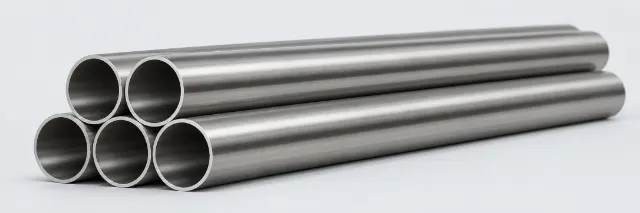 Tube & pipeφ1 – 219 × 0.25 – 25 mm
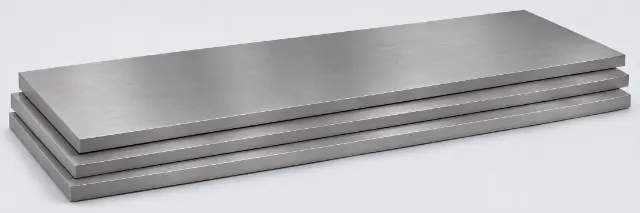 Plate4.76 – 80 mm
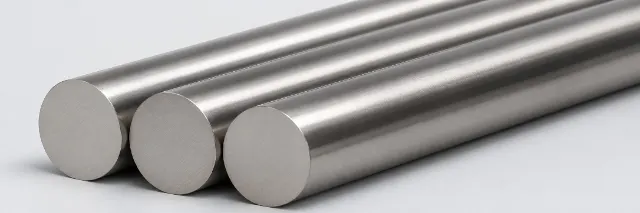 Barφ8 – 300 mm
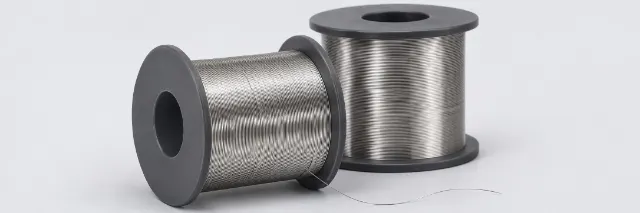 Wire & filler metalsφ0.01 – 8 mm
For this grade we can supply, against your service conditions:
- Tube, plate, strip, bar, forgings, wire and more — with size range and lead time
- Chemistry and mechanical test report (EN 10204 3.1 / 3.2)
- Like-for-like alternatives and selection advice
- Applicable standards and inspection scope
Or email us: info@kochlin.com