Physical properties
| Density | 8.44 | g/cm³ |
| Melting point | 1290 – 1350 | °C |
| Modulus E | 207.5 | GPa |
| Thermal conductivity | 9.8 | W/(m·K) |
| Thermal expansion | 12.8 | ×10⁻⁶/K |
| Specific heat | 410 | J/(kg·K) |
| Resistivity | 129 | μΩ·cm |
Informative values: they vary with composition, condition and test method. Use the governing standard or measured mill data for pressure and heat-transfer calculations.
Processing & welding
Welding — Excellent (ERNiCrMo-3 filler; PWHT usually not required)
Cold forming — Good: cold-forms by standard processes, but work-hardens quickly and needs high forming loads — anneal between heavy reductions
Hot working — Heat to no more than 1177 °C; heavy forging from 1177 down to 1010 °C, lighter reductions down to 927 °C; keep reductions uniform, with final open-die reductions of at least 15–20 %, to avoid a duplex grain structure
Machining — Turning: coated carbide 14–34 m/min, high-speed steel 4.0–10.7 m/min; feed 0.13–0.51 mm/rev
Heat treatment — Anneal formed parts at 927–1038 °C; solution-treat at 1093–1204 °C (Grade 2); the cooling rate has no significant effect
Chemical composition
Nominal: mid-range where both limits are given, the cap where only a maximum is, balance takes the remainder. Exact specified ranges below.
| Element | Name | Content % | |
|---|---|---|---|
| Main elements5 elements | |||
| Ni | Nickel | ≥ 58% | |
| Cr | Chromium | 20 – 23% | |
| Mo | Molybdenum | 8 – 10% | |
| Fe | Iron | ≤ 5% | |
| Nb+Ta | Niobium+Tantalum | 3.15 – 4.15% | |
| Element | Name | Content % | |
|---|---|---|---|
| Minor & residual8 elements | |||
| Al | Aluminium | ≤ 0.4% | |
| Ti | Titanium | ≤ 0.4% | |
| C | Carbon | ≤ 0.1% | |
| Mn | Manganese | ≤ 0.5% | |
| Si | Silicon | ≤ 0.5% | |
| P | Phosphorus | ≤ 0.015% | |
| S | Sulphur | ≤ 0.015% | |
| Co | Cobalt | ≤ 1% | |
Mechanical minima by form
Guaranteed values differ by form, size and delivery condition; quotations confirm the specification, form, size and condition.
| Form | Condition | Rm MPa | Rp0.2 MPa | A ≥ % | Other requirements and notes |
|---|---|---|---|---|---|
| Bar and forgings | |||||
| Rod and bar (≤102 mm) | Grade 1 (annealed) | ≥ 827 (120 ksi) | ≥ 414 (60 ksi) | ≥ 30 | |
| Rod and bar (102–254 mm) | Grade 1 (annealed) | ≥ 758 (110 ksi) | ≥ 345 (50 ksi) | ≥ 25 | |
| Rod and bar (all sizes) | Grade 2 (solution annealed) | ≥ 690 (100 ksi) | ≥ 276 (40 ksi) | ≥ 30 | |
| Rod and bar (≤63 mm) | Grade 3 (solution annealed and cold-worked) | ≥ 930 (135 ksi) | ≥ 690 (100 ksi) | ≥ 25 | Grade 3 exists for bar only; if no grade is specified, Grade 1 is supplied. |
| Forgings (section ≤102 mm) | Grade 1 (annealed) | ≥ 827 (120 ksi) | ≥ 414 (60 ksi) | ≥ 30 | |
| Forgings (102–254 mm) | Grade 1 (annealed) | ≥ 758 (110 ksi) | ≥ 345 (50 ksi) | ≥ 25 | Banded by the largest section: if any section exceeds 102 mm, this band applies. |
| Forgings (all sizes) | Grade 2 (solution annealed) | ≥ 690 (100 ksi) | ≥ 276 (40 ksi) | ≥ 30 | |
| Bar, forgings and flash welded rings (≤101.6 mm) | Annealed | ≥ 827 (120 ksi) | ≥ 414 (60 ksi) | ≥ 30 | Bars shall not be cut from plate. |
| Bar, forgings and flash welded rings (101.6–254 mm) | Annealed | ≥ 758 (110 ksi) | ≥ 345 (50 ksi) | ≥ 25 | |
| Bars (EN 10095, d ≤100 mm) | +A (annealed) | 820 – 1050 | ≥ 415 | ≥ 30 | Wire rod (≤25 mm): only the tensile strength applies. |
| Bars (EN 10095, 100–250 mm) | +A (annealed) | 760 – 1000 | ≥ 345 | ≥ 25 | |
| Plate, sheet and strip | |||||
| Cold-rolled sheet and strip | Grade 1 (annealed, ≥871 °C) | ≥ 827 (120 ksi) | ≥ 414 (60 ksi) | ≥ 30 | |
| Hot-rolled sheet and plate (≤70 mm) | Grade 1 (annealed) | ≥ 758 (110 ksi) | ≥ 379 (55 ksi) | ≥ 30 | |
| Cold-rolled plate (≤9.5 mm) | Grade 1 (annealed) | ≥ 758 (110 ksi) | ≥ 379 (55 ksi) | ≥ 30 | |
| Sheet, strip and plate (all) | Grade 2 (solution annealed, ≥1093 °C) | ≥ 690 (100 ksi) | ≥ 276 (40 ksi) | ≥ 30 | Yield not required below 0.508 mm, elongation below 0.254 mm. |
| Sheet, strip and plate (≤25.4 mm) | Annealed (≥870 °C) | ≥ 827 (120 ksi) | ≥ 414 (60 ksi) | ≥ 30 | Applies up to 25.4 mm; thicker by agreement. |
| Sheet, strip and foil (≤2.54 mm) | Consumable-electrode remelted, cold rolled and annealed | ≥ 827 (120 ksi) | ≥ 414 (60 ksi) | ≥ 40 | Multiple melting required (consumable-electrode remelt, or VIM plus remelt). Yield not required below 0.25 mm, elongation below 0.13 mm. |
| Flat products (EN 10095, 3–75 mm) | +A (annealed) | 760 – 1000 | ≥ 380 | ≥ 30 | A ≥ 30 % longitudinal and transverse; the EN 10095 grade specifies C 0.03–0.10 % (ASTM sets a maximum only). |
| Flat products (EN 10095, under 3 mm) | +A (annealed) | 820 – 1050 | ≥ 415 | ≥ 30 | |
| Tube and pipe | |||||
| Seamless pipe and tube | Grade 1 (annealed) | ≥ 827 (120 ksi) | ≥ 414 (60 ksi) | ≥ 30 | |
| Seamless pipe and tube | Grade 2 (solution annealed) | ≥ 690 (100 ksi) | ≥ 276 (40 ksi) | ≥ 30 | Hot-forming-quality pipe and tube: chemistry and surface only, no tensile requirement. |
| Welded pipe | Grade 1 (annealed) | ≥ 825 (120 ksi) | ≥ 415 (60 ksi) | ≥ 30 | |
| Welded pipe | Grade 2 (solution annealed) | ≥ 690 (100 ksi) | ≥ 275 (40 ksi) | ≥ 30 | |
| Welded tube | Grade 1 (annealed) | ≥ 827 (120 ksi) | ≥ 414 (60 ksi) | ≥ 30 | |
| Welded tube | Grade 2 (solution annealed) | ≥ 690 (100 ksi) | ≥ 276 (40 ksi) | ≥ 30 | |
| Tubing (seamless or welded) | Annealed | ≥ 827 (120 ksi) | ≥ 414 (60 ksi) | ≥ 35 | Tubing under 3.2 mm OD or 0.38 mm wall: testing and acceptance by agreement. |
| Fittings and flanges | |||||
| Fittings (factory-made wrought butt-weld / socket) | Grade 1: 1600 °F [871 °C], rapid air or water quench | — | — | — | Recommended temperature; tolerance ±15 °C (±25 °F). Grade 1 fittings are tension tested per lot. |
| Fittings (factory-made wrought butt-weld / socket) | Grade 2: 2000 °F [1093 °C] minimum, rapid air or water quench | — | — | — | Minimum temperature. No tension test needed when the starting material is Grade 2 and the final heat treatment meets the solution requirement. |
Strength vs temperature and stress-strain (typical)
Everything in this section is a manufacturer typical value, not a specification minimum. The guaranteed figures are in "Mechanical minima by form"; the two must not be interchanged.
| Temp °C | Rm MPa | Rp0.2 MPa |
|---|---|---|
| 20 | 930 | 490 |
| 200 | 870 | 430 |
| 400 | 820 | 400 |
| 540 | 790 | 390 |
| 650 | 720 | 380 |
| 760 | 500 | 340 |
| 870 | 190 | 165 |
Creep behaviour
Guidance values (MPa) — Mean values of a scatter band. They are neither an acceptance requirement nor a design allowable stress. Figures in parentheses are long-term extrapolations and less reliable than the tested range.
| Temp °C | Rupture strength Ru | |
|---|---|---|
| 1 000 h | 10 000 h | |
| 700 | 260 | 190 |
| 800 | 107 | 63 |
| 900 | 34 | 20 |
Pressure design must take allowable stresses from the governing code (EN 13445, ASME and the like).
⚠ Only three temperatures appear (700, 800 and 900 °C) and there are no 100 000 h values: 625 is a solution-strengthened corrosion-resistant alloy, not a long-term heat-resisting grade. Long-term high-temperature load-bearing design needs a dedicated heat-resisting grade or the manufacturer's own long-term data.
⚠ The maximum application temperature in air, Tₐ = 1 000 °C, is an oxidation criterion, not a load-bearing one. It means the metal loss from scaling does not exceed 1 g/(m²·h) at Tₐ, and does not exceed 2 g/m² on average at Tₐ + 50 °C over 120 h with four intermediate coolings. It is the LOWEST of the five nickel grades in this table (600 and Nimonic 75 are 1 150 °C; 601 and 45TM are 1 200 °C). What 625 is good at is corrosion resistance and intermediate-temperature strength, not a high oxidation ceiling.
⚠ EN 10095's composition differs from the same-named ASTM grade in one substantive way: EN sets a carbon MINIMUM. The EN 10095 grade requires C 0.03-0.10 %, whereas ASTM N06625 specifies only a carbon maximum. The reason is that this specification is written for heat-resisting service, and carbon is what supplies high-temperature creep strength — material low in carbon creeps sooner. ⚠ The creep data in this section therefore applies to material that meets that carbon floor. Same-grade material supplied to ASTM with carbon below it cannot simply be read off this table. For heat-resisting service, write the carbon minimum into the contract.
Above 593 °C where creep resistance is required, order Grade 2 (solution annealed); at 593 °C and below, Grade 1 (annealed) is the norm. Grade 2 has the lower room-temperature strength — it is not a higher grade.
Corrosion resistance
These ratings summarise engineering practice; they are not a specification requirement. Actual selection must account for concentration, temperature, velocity, crevices and weld condition, and should rest on coupon tests or the manufacturer's corrosion data.
| Medium / environment | Rating | Basis and limits |
|---|---|---|
| Wet H₂S | ✓ Excellent | Listed in NACE MR0175 / ISO 15156-3: annealed, no limit on H₂S or temperature; cold-worked ≤40 HRC with H₂S limits by temperature |
| CO₂ | ✓ Excellent | Extensive HPHT sour-service record |
| Seawater / Cl⁻ | ✓ Excellent | PREN ≈ 50 — front rank for pitting and crevice resistance in seawater |
| Chloride stress-corrosion cracking | ✓ Excellent | High-nickel matrix — practically immune |
| Sulphuric acid | ○ Fair | Usable at low-to-medium concentration and temperature; assess hot concentrated acid |
| Hydrochloric acid | ○ Fair | Dilute and cool service only; both concentration and temperature limited |
| Nitric acid | ○ Fair | High chromium keeps it passive; suitable at low to medium concentration |
| Hydrofluoric acid | ! Caution | Requires specific assessment — Monel is usually preferred |
| Caustic (NaOH) | ✓ Excellent | High-nickel matrix resists caustic |
| High-temperature oxidation | ✓ Excellent | Protective Cr₂O₃ scale, usable in air to about 1000 °C; above that choose a heat-resisting alloy such as 601 |
Grain size
Required by the standard, conditionally
| Specification, form and thickness | ASTM micrograin size | Mean grain diameter, max |
|---|---|---|
| AMS 5599 sheet and strip ≤1.25 mm | No. 5 or finer | 0.0635 mm |
| AMS 5599 sheet and strip 1.25 – 4.75 mm | No. 4 or finer | 0.0898 mm |
| AMS 5599 plate | No. 3 or finer | 0.127 mm |
| AMS 5879 sheet, strip and foil ≤0.25 mm | No. 8 or finer | 0.0225 mm |
| AMS 5879 0.25 – 1.27 mm | No. 6 or finer | 0.0449 mm |
| AMS 5879 1.27 – 2.54 mm | No. 5 or finer | 0.0635 mm |
| AMS 5666 bar, forgings and rings <177.8 mm | No. 5 or finer | 0.0635 mm |
| AMS 5666 bar, forgings and rings 177.8 – 254 mm | No. 4 or finer | 0.0898 mm |
| AMS 5581 tubing | No. 5 or finer | 0.0635 mm |
| ASTM B444 seamless tube (only with Supplementary Requirement S1) | No. 5.0 or finer | 0.0635 mm |
⚠ The direction is "or finer": the grain may not be coarser than this.
More detail 2
Material ordered to the ASTM specifications generally has no grain-size requirement; seamless tube to B444 is tested only when Supplementary Requirement S1 is on the order.
If you order Grade 2 (solution annealed) and also require a fine grain, the solution temperature has to sit at the bottom of its range (see the typical values below) — confirm with the mill first.
Typical values
| Condition | Grain size | Mean grain diameter |
|---|---|---|
| Annealed (Grade 1, 927–1038 °C) | approx. No. 8 | approx. 20 μm |
| Solution annealed (Grade 2, 1093–1204 °C) | approx. No. 6 – 2.5 | approx. 50 – 150 μm |
The higher the solution temperature, the coarser the grain; a coarse grain helps creep resistance.
More detail 1
Measured on cold-drawn rod held 1 h at these temperatures; actual product varies with its processing history.
Where this grade is recommended
Matched in 33 service conditions; ranks and scores computed from the condition-scoring matrix.
| Service condition | Industry | Temperature | Rank | Score |
|---|---|---|---|---|
| Downhole tubing (sour H₂S/CO₂) | Oil & Gas | ≤ 150 °C | 1 / 10 | 93 |
| Subsea lines, risers & manifolds | Oil & Gas | ≤ 60 °C | 1 / 7 | 93 |
| Subsea connectors & hydraulics | Marine & Offshore | ≤ 40 °C | 1 / 5 | 93 |
| Waste-to-energy boilers | Environmental & FGD | 450 – 700 °C | 1 / 8 | 93 |
| Valves, fittings & flanges | Oil & Gas | ≤ 150 °C | 1 / 14 | 92 |
| High-velocity seawater | Marine & Offshore | ≤ 40 °C | 2 / 9 | 92 |
| Flue-gas desulphurisation | Environmental & FGD | ≤ 80 °C | 3 / 11 | 92 |
| Logging cable & tool housing | Oil & Gas | ≤ 150 °C | 1 / 6 | 91 |
| Platform structures & clamps | Marine & Offshore | Atmospheric & splash | 1 / 7 | 90 |
| Geothermal & brine | Hydrogen & New Energy | 200 – 350 °C | 1 / 5 | 90 |
| Water & gas injection | Oil & Gas | ≤ 60 °C | 2 / 8 | 90 |
| Wellhead & Christmas tree | Oil & Gas | ≤ 120 °C | 3 / 7 | 90 |
Top 12 by score shown; 21 more matched conditions — browse them by industry in the selector. Open the selector →
Designations & equivalents
| W.Nr. (Germany) | 2.4856 |
| EN designation | NiCr22Mo9Nb |
| Trade name(s) | Inconel 625 / Nicrofer 6020 / Chronin 625 / Nickelvac 625 |
| ASTM / AISI | B366 / B443 / B444 / B446 / B564 / B704 / B705 / B751 / B775 / B829 |
| AMS (SAE aerospace) | 5581 / 5599 / 5666 / 5837 / 5869 / 5879 |
| BS (UK) | NA21 (BS 3072/3074/3076) |
| ISO | NW6625 |
| NACE sour service | ISO 15156-3: annealed, no limit on H₂S or temperature; cold-worked ≤40 HRC |
| JIS (Japan) | NCF625 |
Cross-references are common near-equivalents for search and shortlisting; substitution across standards requires clause-by-clause verification. All grades in one cross-reference table →
Applicable standards
14 specifications. Name the standard and its edition on the order.
Guaranteed values and required tests differ between specifications — see Mechanical minima by form for the figures per form.
Frequently asked questions
What is Alloy 625 · UNS N06625?
Alloy 625 · UNS N06625 — Ni corrosion-resistant. Downhole tools & packers · Offshore riser clamps · Flue-gas desulphurisation · Chloride-bearing chemical service · Aero-engine exhaust systems · Nuclear components
What is the maximum service temperature of N06625?
Typically about 650 °C; the practical limit depends on media, stress and design life — acceptance per the governing standard.
What is the tensile strength of N06625?
Typical tensile strength is about 930 MPa (manufacturer typical value, varying with condition and product form). The specified minima are under "Mechanical minima by form" on this page.
Which standards cover N06625?
GB/T 15007 (designation NS3306), ASTM B443 (plate, sheet & strip), ASTM B444 (seamless pipe & tube), ASTM B446 (rod & bar), ASTM B564 (forgings), ASTM B704 (welded tube), ASTM B705 (welded pipe), ASTM B366 (fittings), AMS 5599 (plate, sheet & strip), AMS 5879 (sheet, strip & foil), AMS 5666 (bar, forgings & flash-welded rings), AMS 5581 (seamless or welded tubing), NACE MR0175 / ISO 15156-3 (sour service), EN 10095 (heat-resisting steels and nickel alloys)
Where is N06625 typically used?
Downhole tubing (sour H₂S/CO₂) (Oil & Gas); Subsea lines, risers & manifolds (Oil & Gas); Subsea connectors & hydraulics (Marine & Offshore); Waste-to-energy boilers (Environmental & FGD)
In which forms is N06625 available?
Tube, plate, strip, bar, forgings, wire and other forms — sizes and delivery condition confirmed per order, with EN 10204 3.1 / 3.2 certification.
Same series
Download PDF datasheet
This grade’s datasheet as an A4 PDF — for filing, printing or forwarding to colleagues.
Download PDF datasheetSupply & enquiry
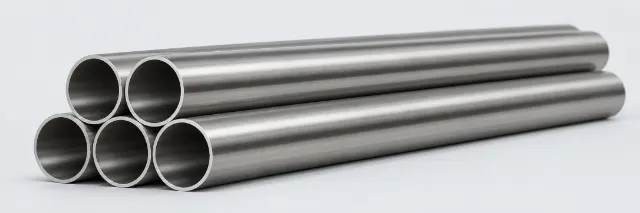 Tube & pipeφ1 – 219 × 0.25 – 25 mm
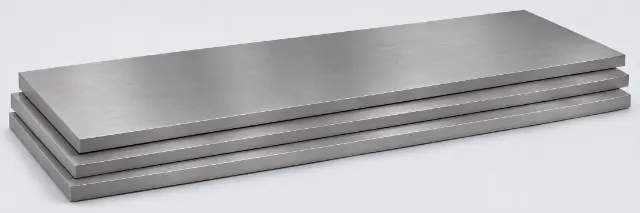 Plate4.76 – 80 mm
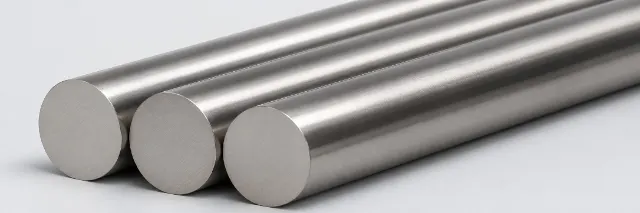 Barφ8 – 300 mm
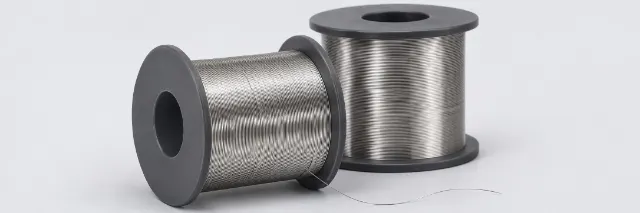 Wire & filler metalsφ0.01 – 8 mm
For this grade we can supply, against your service conditions:
- Tube, plate, strip, bar, forgings, wire and more — with size range and lead time
- Chemistry and mechanical test report (EN 10204 3.1 / 3.2)
- Like-for-like alternatives and selection advice
- Applicable standards and inspection scope
Or email us: info@kochlin.com
Further reading: Alloy 625 Grade 1 vs Grade 2: a heat-treatment condition, not a quality level