Chemical composition
Nominal: mid-range where both limits are given, the cap where only a maximum is, balance takes the remainder. Exact specified ranges below.
| Element | Name | Content % | |
|---|---|---|---|
| Main elements3 elements | |||
| Mo | Molybdenum | Bal. | |
| La₂O₃ | Lanthanum oxide (nominal addition, alternative basis for La) | 0.1 – 1.8% | |
| La | Lanthanum (nominal addition) | 0.08 – 1.5% | |
| Element | Name | Content % | |
|---|---|---|---|
| Minor & residual8 elements | |||
| Al | Aluminium | ≤ 0.002% | |
| Ca | Calcium | ≤ 0.002% | |
| Fe | Iron | ≤ 0.006% | |
| Mg | Magnesium | ≤ 0.002% | |
| Ni | Nickel | ≤ 0.005% | |
| Si | Silicon | ≤ 0.005% | |
| C | Carbon | ≤ 0.01% | |
| N | Nitrogen | ≤ 0.003% | |
Mechanical minima by form
Guaranteed values differ by form, size and delivery condition; quotations confirm the specification, form, size and condition.
| Form | Condition | Rm MPa | Rp0.2 MPa | A ≥ % |
|---|---|---|---|---|
| Plate, 0.13–20.0 mm thick | Cold rolled (Y), hot rolled (R) or stress-relief annealed (m) | — | — | — |
| Plate | Additional testing by contract | — | — | — |
Where this grade is recommended
Matched in 9 service conditions; ranks and scores computed from the condition-scoring matrix.
| Service condition | Industry | Temperature | Rank | Score |
|---|---|---|---|---|
| CZ hot zone (Si) | Solar & Glass | 1400 – 1600 °C | 2 / 4 | 92 |
| Glass melting electrodes | Solar & Glass | 1200 – 1600 °C | 2 / 4 | 90 |
| Vacuum hot zone & hot dies | Furnaces & Vacuum | 1000 – 1400 °C | 4 / 6 | 89 |
| HT boats & fixtures | Semiconductor & Vac-Electronics | 800 – 1200 °C | 4 / 5 | 89 |
| Heat shields & reflectors | Furnaces & Vacuum | 1000 – 1400 °C | 3 / 5 | 88 |
| Heating elements & electrodes | Furnaces & Vacuum | 1000 – 1400 °C | 5 / 7 | 88 |
| Sintering boats & setters | Furnaces & Vacuum | 1000 – 1350 °C | 4 / 5 | 87 |
| Heaters & susceptors | Semiconductor & Vac-Electronics | ≤ 500 °C | 4 / 4 | 86 |
| Sapphire growth crucibles | Solar & Glass | ~2050 °C | 4 / 4 | 78 |
Designations & equivalents
| Trade name(s) | MoLa / Mo-La2O3 / ML |
Cross-references are common near-equivalents for search and shortlisting; substitution across standards requires clause-by-clause verification. All grades in one cross-reference table →
Applicable standards
Name the standard and its edition on the order.
Frequently asked questions
What is Mo-La Lanthanated Molybdenum?
Mo-La Lanthanated Molybdenum — Molybdenum. Lanthana-dispersed — resists recrystallisation embrittlement
What is the maximum service temperature of MoLa?
Typically about 1300 °C; the practical limit depends on media, stress and design life — acceptance per the governing standard.
Which standards cover MoLa?
GB/T 3876—2017 MoLa
Where is MoLa typically used?
CZ hot zone (Si) (Solar & Glass); Glass melting electrodes (Solar & Glass); Vacuum hot zone & hot dies (Furnaces & Vacuum); HT boats & fixtures (Semiconductor & Vac-Electronics)
In which forms is MoLa available?
Tube, plate, strip, bar, forgings, wire and other forms — sizes and delivery condition confirmed per order, with EN 10204 3.1 / 3.2 certification.
Same series
Download PDF datasheet
This grade’s datasheet as an A4 PDF — for filing, printing or forwarding to colleagues.
Download PDF datasheetSupply & enquiry
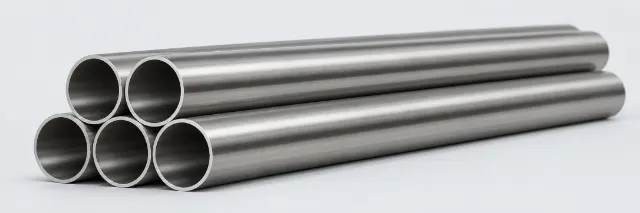 Tube & pipeφ1 – 219 × 0.25 – 25 mm
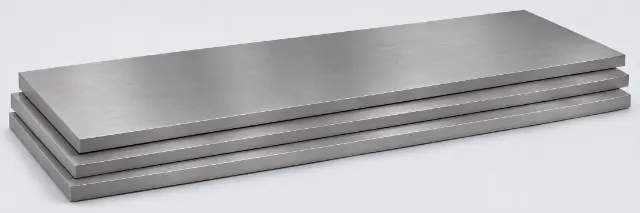 Plate4.76 – 80 mm
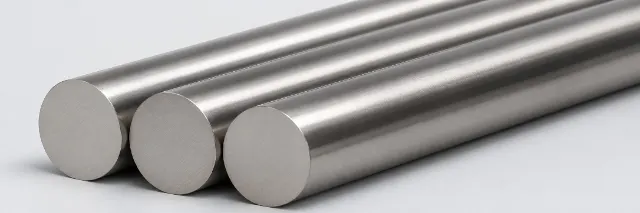 Barφ8 – 300 mm
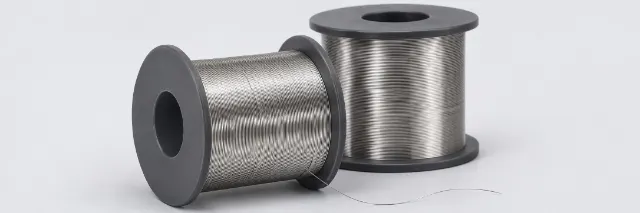 Wire & filler metalsφ0.01 – 8 mm
For this grade we can supply, against your service conditions:
- Tube, plate, strip, bar, forgings, wire and more — with size range and lead time
- Chemistry and mechanical test report (EN 10204 3.1 / 3.2)
- Like-for-like alternatives and selection advice
- Applicable standards and inspection scope
Or email us: info@kochlin.com