Physical properties
| Density | 8.3 | g/cm³ |
| Modulus E | 212 | GPa |
| Thermal conductivity | 13 | W/(m·K) |
| Thermal expansion | 12.4 | ×10⁻⁶/K |
Informative values: they vary with composition, condition and test method. Use the governing standard or measured mill data for pressure and heat-transfer calculations.
Chemical composition
Nominal: mid-range where both limits are given, the cap where only a maximum is, balance takes the remainder. Exact specified ranges below.
| Element | Name | Content % | |
|---|---|---|---|
| Main elements9 elements | |||
| Ni | Nickel | Bal. | |
| Cr | Chromium | 18 – 21% | |
| Co | Cobalt | 12 – 15% | |
| Mo | Molybdenum | 3.5 – 5% | |
| Ti | Titanium | 2.75 – 3.25% | |
| Al | Aluminium | 1.2 – 1.6% | |
| C | Carbon | 0.02 – 0.1% | |
| Zr | Zirconium | 0.02 – 0.08% | |
| B | Boron | 0.003 – 0.01% | |
| Element | Name | Content % | |
|---|---|---|---|
| Minor & residual3 elements | |||
| Fe | Iron | ≤ 2% | |
| Mn | Manganese | ≤ 0.1% | |
| Si | Silicon | ≤ 0.15% | |
Mechanical minima by form
Guaranteed values differ by form, size and delivery condition; quotations confirm the specification, form, size and condition.
| Form | Condition | Rm MPa | Rp0.2 MPa | A ≥ % | Other requirements and notes |
|---|---|---|---|---|---|
| Bar and forgings | |||||
| Bar, forgings and forging stock | 996–1038 °C for 4 h, oil or water quenched; 843 ± 14 °C for 4 h, air cooled; 760 ± 14 °C for 16 h, air or furnace cooled | ≥ 1100 (160 ksi) | ≥ 760 (110 ksi) | ≥ 15 | Also specified: Reduction of area Z ≥ 18 % · Hardness ≥ 310 HBW |
| Forgings (≤82.6 mm) | AMS5704: 996–1038 °C for 4 h, oil or water quenched + 843 °C for 4 h, air cooled + 760 °C for 16 h, air cooled | ≥ 1207 (175 ksi) | ≥ 827 (120 ksi) | ≥ 15 | Also specified: Hardness 341 HB – 401 HB |
| Bar, forgings and flash-welded rings (≤83 mm) | AMS5707: three-step heat treated (1825–1900 °F solution route) | ≥ 1103 (160 ksi) | ≥ 758 (110 ksi) | ≥ 15 | |
| Bar and forgings | AMS5709: 1079 ± 14 °C for 4 h + 843 ± 8 °C for 4 h (24 h for blade forgings) + 760 ± 8 °C for 16 h | — | — | — | Also specified: Hardness 32 HRC – 42 HRC |
| Bar, forgings, rings and upset forging stock | AMS5708: supplied solution treated at 1079 ± 14 °C; specimens then stabilised and aged | — | — | — | Also specified: Hardness 32 HRC – 42 HRC |
| Plate, sheet and strip | |||||
| Plate, sheet and strip (≤0.51 mm) | AMS5544: supplied annealed; specimens then 996 ± 14 °C for 2 h + 843 ± 8 °C for 4 h + 760 ± 8 °C for 16 h | ≥ 1172 (170 ksi) | ≥ 758 (110 ksi) | ≥ 15 | Also specified: Hardness 34 HRC – 44 HRC |
| Plate, sheet and strip (>0.51 mm) | AMS5544: supplied annealed; specimens given the three-step heat treatment | ≥ 1207 (175 ksi) | ≥ 793 (115 ksi) | ≥ 20 | Also specified: Hardness 34 HRC – 44 HRC |
| Tube and pipe | |||||
| Welded and drawn tube (OD ≥3.18 mm, wall ≥0.38 mm) | Supplied annealed; specimens given 996 ± 14 °C for 2 h + 843 ± 8 °C for 4 h + 760 ± 8 °C for 16 h | ≥ 1103 (160 ksi) | ≥ 724 (105 ksi) | ≥ 15 | Also specified: Hardness 34 HRC – 44 HRC |
| Several forms | |||||
| Long products ≤160 mm and flat products ≤20 mm (EN 10302, 2.4654) | +P (precipitation hardened) | ≥ 1100 | ≥ 760 | ≥ 15 | Flat products: A ≥ 20 %, five points lower under 3 mm. |
Hardness requirement
Required by the standard — ≥ 310 HB (34 HRC min)
Solution + stabilize + precipitation hardened condition.
More detail 1
The 15% elongation and 18% reduction of area are forging values.
Creep behaviour
Guidance values (MPa) — Mean values of a scatter band. They are neither an acceptance requirement nor a design allowable stress. Figures in parentheses are long-term extrapolations and less reliable than the tested range.
| Temp °C | Rupture strength Ru | |
|---|---|---|
| 10 000 h | 100 000 h | |
| 650 | 470 | 360 |
| 700 | 340 | 245 |
| 800 | 140 | 94 |
A stress-rupture acceptance requirement also applies; see "Stress-rupture requirement" below. That is a pass/fail acceptance test, quite unlike the informative guidance values in this section.
Thermal expansion and elastic modulus
| Temperature range | Mean coefficient ×10⁻⁶/K |
|---|---|
| 20–200 °C | 12.4 |
| 20–300 °C | 12.9 |
| 20–400 °C | 13.3 |
| 20–600 °C | 14.1 |
| 20–800 °C | 15.3 |
| 20–1000 °C | 17.5 |
Elastic modulus vs temperature
| Temp °C | E GPa |
|---|---|
| 20 | 212 |
| 100 | 208 |
| 200 | 204 |
| 300 | 200 |
| 400 | 194 |
| 500 | 188 |
| 600 | 181 |
| 700 | 173 |
| 800 | 164 |
Stress-rupture requirement
| Heat treatment | Solution + stabilize + precipitation hardened |
| Test temperature | 1500 °F (816 °C) |
| Test stress | 33 000 psi (230 MPa) |
| Minimum life | ≥ 100 h |
| Elongation | ≥ 5 % |
This is a pass/fail acceptance test, not a design creep curve.
Where this grade is recommended
Matched in 3 service conditions; ranks and scores computed from the condition-scoring matrix.
| Service condition | Industry | Temperature | Rank | Score |
|---|---|---|---|---|
| Turbine discs & blades | Aerospace | 600 – 800 °C | 2 / 8 | 91 |
| HT bolting & seal rings | Aerospace | 650 – 900 °C | 1 / 6 | 88 |
| Gas-turbine hot section | Power & Nuclear | 800 – 950 °C | 4 / 10 | 88 |
Designations & equivalents
| W.Nr. (Germany) | 2.4654 |
| EN designation | NiCr20Co13Mo4Ti3Al |
| Trade name(s) | Waspaloy |
| ASTM / AISI | B637 |
| AMS (SAE aerospace) | 5544 / 5586 / 5704 / 5706 / 5707 / 5708 / 5709 / 5828 |
Cross-references are common near-equivalents for search and shortlisting; substitution across standards requires clause-by-clause verification. All grades in one cross-reference table →
Applicable standards
10 specifications. Name the standard and its edition on the order.
Guaranteed values and required tests differ between specifications — see Mechanical minima by form for the figures per form.
Frequently asked questions
What is GH4738 (Waspaloy) · UNS N07001?
GH4738 (Waspaloy) · UNS N07001 — Ni superalloys. The classic turbine-disc alloy — 760 °C-class creep-rupture strength
What is the maximum service temperature of N07001?
Typically about 760 °C; the practical limit depends on media, stress and design life — acceptance per the governing standard.
What is the tensile strength of N07001?
The specified minimum tensile strength is 1100 MPa for the main product form. Minima for other forms and sizes are listed under "Mechanical minima by form" on this page.
Which standards cover N07001?
ASTM B637, SAE AMS5544 Waspaloy, SAE AMS5586 Waspaloy, SAE AMS5704 Waspaloy≤ 82.6 mm, SAE AMS5706 Waspaloy, SAE AMS5707 Waspaloy, SAE AMS5708 Waspaloy1975 °F, SAE AMS5709 Waspaloy1975 °F, SAE AMS5828 Waspaloy, EN 10302 (creep-resisting steels, nickel and cobalt alloys)
Where is N07001 typically used?
Turbine discs & blades (Aerospace); HT bolting & seal rings (Aerospace); Gas-turbine hot section (Power & Nuclear)
In which forms is N07001 available?
Tube, plate, strip, bar, forgings, wire and other forms — sizes and delivery condition confirmed per order, with EN 10204 3.1 / 3.2 certification.
Same series
Download PDF datasheet
This grade’s datasheet as an A4 PDF — for filing, printing or forwarding to colleagues.
Download PDF datasheetSupply & enquiry
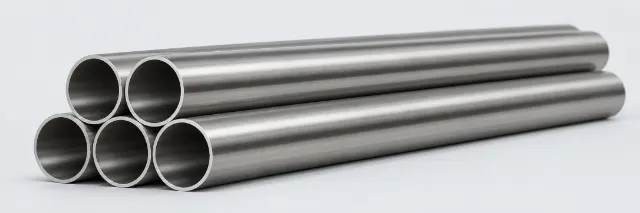 Tube & pipeφ1 – 219 × 0.25 – 25 mm
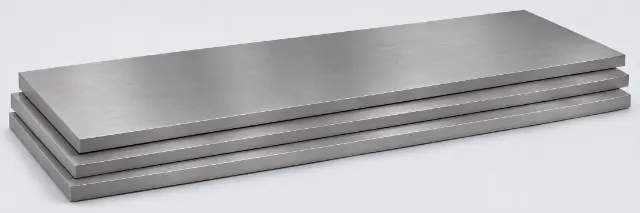 Plate4.76 – 80 mm
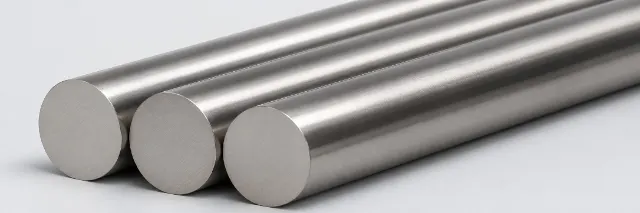 Barφ8 – 300 mm
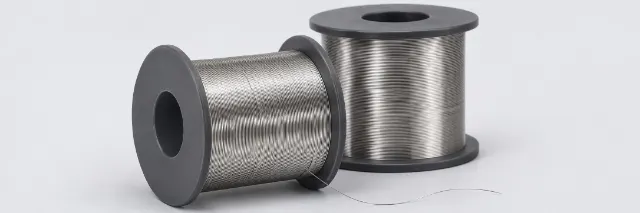 Wire & filler metalsφ0.01 – 8 mm
For this grade we can supply, against your service conditions:
- Tube, plate, strip, bar, forgings, wire and more — with size range and lead time
- Chemistry and mechanical test report (EN 10204 3.1 / 3.2)
- Like-for-like alternatives and selection advice
- Applicable standards and inspection scope
Or email us: info@kochlin.com