Physical properties
| Density | 4.51 | g/cm³ |
| Melting point | ≈1660 | °C |
| Modulus E | 105 | GPa |
| Thermal conductivity | 19 | W/(m·K) |
| Thermal expansion | 8.6 | ×10⁻⁶/K |
| Specific heat | 523 | J/(kg·K) |
| Resistivity | 0.52 | μΩ·m |
Informative values: they vary with composition, condition and test method. Use the governing standard or measured mill data for pressure and heat-transfer calculations.
Processing & welding
Welding — Excellent (TIG / plasma, inert-gas shielding on both faces of the weld)
Cold forming — Fair: large springback, so use generous bend radii; titanium galls, so protect the tooling
Hot working — Good: control temperature and furnace atmosphere to avoid hydrogen and oxygen pick-up
Machining — Low thermal conductivity concentrates heat at the tool: low speed, generous feed, ample coolant, sharp tools
Heat treatment — Anneal at 600–700 °C for 1–3 h, air cool
Chemical composition
Nominal: mid-range where both limits are given, the cap where only a maximum is, balance takes the remainder. Exact specified ranges below.
| Element | Name | Content % | |
|---|---|---|---|
| Main elements3 elements | |||
| Ti | Titanium | Bal. | |
| Ni | Nickel | 0.6 – 0.9% | |
| Mo | Molybdenum | 0.2 – 0.4% | |
| Element | Name | Content % | |
|---|---|---|---|
| Minor & residual5 elements | |||
| Fe | Iron | ≤ 0.3% | |
| C | Carbon | ≤ 0.08% | |
| O | Oxygen | ≤ 0.25% | |
| N | Nitrogen | ≤ 0.03% | |
| H | Hydrogen | ≤ 0.015% | |
Mechanical minima by form
Guaranteed values differ by form, size and delivery condition; quotations confirm the specification, form, size and condition.
| Form | Condition | Rm MPa | Rp0.2 MPa | A ≥ % | Other requirements and notes |
|---|---|---|---|---|---|
| Forgings | F-12: Annealed | ≥ 483 (70 ksi) | ≥ 345 (50 ksi) | ≥ 18 | Also specified: Reduction of area Z ≥ 25 % Applies to forgings up to 1935 mm² (3 in.²) in cross section; larger sections by agreement. |
Strength vs temperature and stress-strain (typical)
Everything in this section is a manufacturer typical value, not a specification minimum. The guaranteed figures are in "Mechanical minima by form"; the two must not be interchanged.
| Temp °C | Rm MPa | Rp0.2 MPa |
|---|---|---|
| 20 | 520 | 380 |
| 150 | 430 | 300 |
| 300 | 350 | 240 |
Creep behaviour
Titanium creeps at relatively low temperature: above 300 °C sustained load must be checked against creep data.
Corrosion resistance
These ratings summarise engineering practice; they are not a specification requirement. Actual selection must account for concentration, temperature, velocity, crevices and weld condition, and should rest on coupon tests or the manufacturer's corrosion data.
| Medium / environment | Rating | Basis and limits |
|---|---|---|
| Wet H₂S | ✓ Excellent | Listed in NACE MR0175 / ISO 15156-3 (annealed); risk of hydrogen embrittlement above 80 °C when coupled to carbon steel |
| CO₂ | ✓ Excellent | Stable passive film — essentially unaffected by CO₂ partial pressure |
| Seawater / Cl⁻ | ✓ Excellent | Mo + Ni alloyed — markedly better pitting and crevice resistance than CP titanium |
| Chloride stress-corrosion cracking | ✓ Excellent | Essentially insensitive in aqueous chlorides |
| Sulphuric acid | ! Caution | Reducing acid — dilute, cool conditions only |
| Hydrochloric acid | ! Caution | Reducing acid — dilute, cool conditions only; both concentration and temperature limited |
| Nitric acid | ✓ Excellent | Very stable passive film in oxidising acid — never use in fuming nitric acid |
| Hydrofluoric acid | ✕ Not suitable | Destroys the passive film at any concentration — prohibited |
| Caustic (NaOH) | ○ Fair | Suitable at low to medium concentration; assess hot concentrated caustic |
| High-temperature oxidation | ○ Fair | Keep sustained exposure below 550 °C; above that, oxygen pick-up embrittles the metal. Load-bearing parts are also limited to 300 °C by creep |
Grain size
Typical value, annealed — G6–G8
Mean grain diameter approx. 22.5 – 44.9 μm
Where this grade is recommended
Matched in 36 service conditions; ranks and scores computed from the condition-scoring matrix.
| Service condition | Industry | Temperature | Rank | Score |
|---|---|---|---|---|
| High-velocity seawater | Marine & Offshore | ≤ 40 °C | 1 / 9 | 95 |
| Water & gas injection | Oil & Gas | ≤ 60 °C | 1 / 8 | 94 |
| Desalination & RO | Marine & Offshore | ≤ 45 °C | 1 / 12 | 94 |
| Evaporators & tube bundles | Chemical Processing | ≤ 80 °C | 1 / 8 | 93 |
| Seawater piping & HX | Marine & Offshore | 40 – 90 °C | 1 / 11 | 93 |
| Geothermal & brine | Hydrogen & New Energy | 80 – 200 °C | 1 / 5 | 93 |
| Brine evaporation (MVR) | Environmental & FGD | ≤ 100 °C | 1 / 6 | 93 |
| Separators & heat-exchanger internals | Oil & Gas | ≤ 120 °C | 1 / 10 | 92 |
| Seawater cooling | Oil & Gas | ≤ 50 °C | 2 / 6 | 92 |
| Condensers & cooling water | Power & Nuclear | 50 – 90 °C | 1 / 5 | 90 |
| Centrifuges & filtration | Pharma & Fine Chemicals | ≤ 80 °C | 1 / 5 | 90 |
| Flowlines (chlorides) | Oil & Gas | ≤ 80 °C | 2 / 9 | 90 |
Top 12 by score shown; 24 more matched conditions — browse them by industry in the selector. Open the selector →
Designations & equivalents
| UNS | R53400 |
| W.Nr. (Germany) | 3.7105 |
| Trade name(s) | Ti-0.3Mo-0.8Ni |
| ASTM / AISI | B265 / B338 / B348 / B381 / B861 / B862 / B863 (Grade 12) |
Cross-references are common near-equivalents for search and shortlisting; substitution across standards requires clause-by-clause verification. All grades in one cross-reference table →
Applicable standards
10 specifications. Name the standard and its edition on the order.
Guaranteed values and required tests differ between specifications — see Mechanical minima by form for the figures per form.
Frequently asked questions
What is TA10?
TA10 — Titanium. Sour oil & gas tubing · Flowlines · Seawater heat exchangers · Offshore structures · Wet-chlorine equipment
What is the maximum service temperature of TA10?
Typically about 300 °C; the practical limit depends on media, stress and design life — acceptance per the governing standard.
What is the tensile strength of TA10?
Typical tensile strength is about 520 MPa (manufacturer typical value, varying with condition and product form). The specified minima are under "Mechanical minima by form" on this page.
Which standards cover TA10?
GB/T 3620.1 (designations & chemistry), GB/T 3621 (plate & sheet), GB/T 3624 (seamless tube), ASTM B265 (strip, sheet & plate; Grade 12), ASTM B861 (seamless pipe; Grade 12), ASTM B381 (forgings; Grade F-12), NACE MR0175 / ISO 15156-3 (sour service), ASTM B338, ASTM B862, ASTM B363
Where is TA10 typically used?
High-velocity seawater (Marine & Offshore); Water & gas injection (Oil & Gas); Desalination & RO (Marine & Offshore); Evaporators & tube bundles (Chemical Processing)
In which forms is TA10 available?
Tube, plate, strip, bar, forgings, wire and other forms — sizes and delivery condition confirmed per order, with EN 10204 3.1 / 3.2 certification.
Same series
Download PDF datasheet
This grade’s datasheet as an A4 PDF — for filing, printing or forwarding to colleagues.
Download PDF datasheetSupply & enquiry
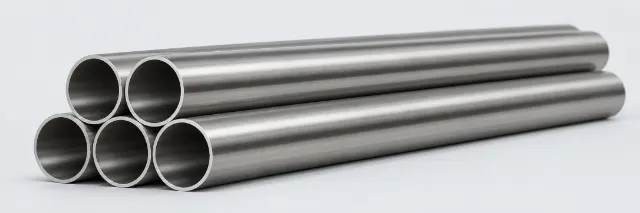 Tube & pipeφ1 – 219 × 0.25 – 25 mm
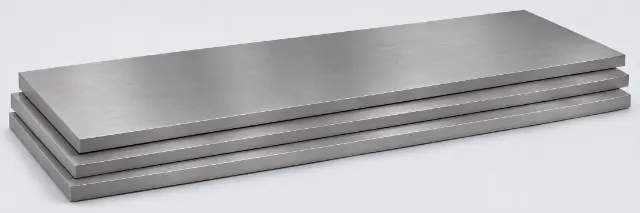 Plate4.76 – 80 mm
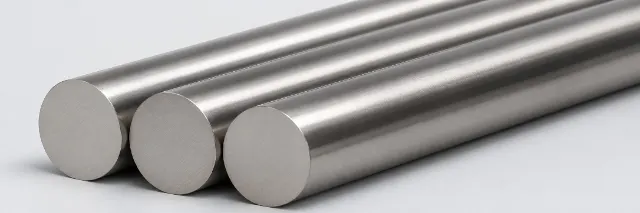 Barφ8 – 300 mm
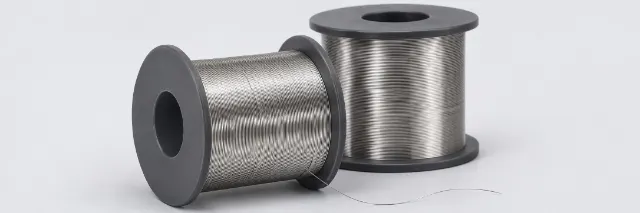 Wire & filler metalsφ0.01 – 8 mm
For this grade we can supply, against your service conditions:
- Tube, plate, strip, bar, forgings, wire and more — with size range and lead time
- Chemistry and mechanical test report (EN 10204 3.1 / 3.2)
- Like-for-like alternatives and selection advice
- Applicable standards and inspection scope
Or email us: info@kochlin.com