Physical properties
| Density | 8.14 | g/cm³ |
| Melting point | 1370 – 1400 | °C |
| Modulus E | 196 | GPa |
| Thermal conductivity | 11.1 | W/(m·K) |
| Thermal expansion | 14.0 | ×10⁻⁶/K |
| Specific heat | 440 | J/(kg·K) |
| Resistivity | 1.13 | μΩ·m |
Informative values: they vary with composition, condition and test method. Use the governing standard or measured mill data for pressure and heat-transfer calculations.
Processing & welding
Welding — Excellent: ERNiCrMo-3 (625 filler) for most applications; matching ERNiFeCr-1 can also be used
Cold forming — Good: same practice as alloy 600; work-hardens somewhat less than common austenitic stainless steels but still fairly fast, so use well-powered equipment
Hot working — 870–1180 °C; for best corrosion resistance finish hot working at 870–980 °C, then air cool or faster
Machining — All standard machining operations; machines best in the annealed temper
Heat treatment — Anneal at 930–980 °C, rapid air cool or water quench (thin sections rarely need quenching; quench heavy sections to avoid sensitisation); the final practice depends on service temperature — agree it with the mill
Chemical composition
Nominal: mid-range where both limits are given, the cap where only a maximum is, balance takes the remainder. Exact specified ranges below.
| Element | Name | Content % | |
|---|---|---|---|
| Main elements6 elements | |||
| Ni | Nickel | 38 – 46% | |
| Fe | Iron | Bal. | |
| Cr | Chromium | 19.5 – 23.5% | |
| Mo | Molybdenum | 2.5 – 3.5% | |
| Cu | Copper | 1.5 – 3% | |
| Ti | Titanium | 0.6 – 1.2% | |
| Element | Name | Content % | |
|---|---|---|---|
| Minor & residual2 elements | |||
| C | Carbon | ≤ 0.05% | |
| Mn | Manganese | ≤ 1% | |
Mechanical minima by form
Guaranteed values differ by form, size and delivery condition; quotations confirm the specification, form, size and condition.
| Form | Condition | Rm MPa | Rp0.2 MPa | A ≥ % | Other requirements and notes |
|---|---|---|---|---|---|
| Bar and forgings | |||||
| Rod and bar (all sizes) | Annealed (hot-finished or cold-drawn) | ≥ 586 (85 ksi) | ≥ 241 (35 ksi) | ≥ 30 | Elongation not required below 2.4 mm diameter or section. Forging-quality rod and bar: chemistry and surface only, no tensile requirement. |
| Forgings (all sizes) | Annealed | ≥ 586 (85 ksi) | ≥ 241 (35 ksi) | ≥ 30 | |
| Plate, sheet and strip | |||||
| Sheet, strip and plate (all) | Annealed | ≥ 586 (85 ksi) | ≥ 241 (35 ksi) | ≥ 30 | Yield not required below 0.51 mm; for cold-rolled strip under 0.25 mm, tensile strength and elongation do not apply. |
| Tube and pipe | |||||
| Seamless pipe and tube | Hot-finished and annealed | ≥ 517 (75 ksi) | ≥ 172 (25 ksi) | ≥ 30 | |
| Seamless pipe and tube | Cold-worked and annealed | ≥ 586 (85 ksi) | ≥ 241 (35 ksi) | ≥ 30 | Hot-forming-quality pipe and tube: chemistry and surface only, no tensile requirement. |
| Small-diameter and thin-wall tube (OD ≤31.8 mm) | No. 1 temper (annealed) | 586 – 793 | ≥ 241 (35 ksi) | ≥ 30 | Supplied to these values when specified on the order (thin-wall: wall ≤3 % of OD). The tensile minimum applies to straight lengths only; not applicable below 3.2 mm OD or 0.381 mm wall. |
| Small-diameter and thin-wall tube (OD ≤31.8 mm) | No. 2 temper (half-hard) | ≥ 724 (105 ksi) | ≥ 517 (75 ksi) | ≥ 15 | |
| Small-diameter and thin-wall tube (OD ≤31.8 mm) | No. 3 temper (full-hard) | ≥ 862 (125 ksi) | ≥ 689 (100 ksi) | ≥ 5 | |
| Condenser and heat-exchanger tube | Annealed | ≥ 586 (85 ksi) | ≥ 241 (35 ksi) | ≥ 30 | |
| Welded tube | Annealed | ≥ 586 (85 ksi) | ≥ 241 (35 ksi) | ≥ 30 | |
| Welded pipe | Annealed | ≥ 585 (85 ksi) | ≥ 240 (35 ksi) | ≥ 30 | |
Strength vs temperature and stress-strain (typical)
Everything in this section is a manufacturer typical value, not a specification minimum. The guaranteed figures are in "Mechanical minima by form"; the two must not be interchanged.
| Temp °C | Rm MPa | Rp0.2 MPa |
|---|---|---|
| 20 | 620 | 310 |
| 150 | 590 | 280 |
| 300 | 560 | 250 |
| 540 | 480 | 220 |
Creep behaviour
825 is a corrosion-resistant grade: for sustained load above 540 °C, move to a stronger grade such as 625.
Corrosion resistance
These ratings summarise engineering practice; they are not a specification requirement. Actual selection must account for concentration, temperature, velocity, crevices and weld condition, and should rest on coupon tests or the manufacturer's corrosion data.
| Medium / environment | Rating | Basis and limits |
|---|---|---|
| Wet H₂S | ✓ Excellent | Listed in NACE MR0175 / ISO 15156-3: annealed, no limit on H₂S or temperature; cold-worked ≤40 HRC with H₂S limits by temperature |
| CO₂ | ✓ Excellent | Extensive service record in sour oil & gas |
| Seawater / Cl⁻ | ○ Fair | Acceptable in flowing seawater; crevice-corrosion risk when stagnant — choose 625 or titanium for severe duty |
| Chloride stress-corrosion cracking | ✓ Excellent | About 40 % nickel — far more resistant than austenitic stainless steel |
| Sulphuric acid | ✓ Excellent | Cu-alloyed: strong performance in dilute to medium sulphuric acid |
| Hydrochloric acid | ○ Fair | Usable at low concentration — assess against temperature |
| Nitric acid | ○ Fair | High chromium keeps it passive; suitable at low to medium concentration |
| Hydrofluoric acid | ! Caution | Only within specific concentration / temperature windows — use with caution |
| Caustic (NaOH) | ✓ Excellent | High-nickel matrix resists caustic |
| High-temperature oxidation | ○ Fair | Adequate short-term; use a heat-resisting alloy for sustained high temperature |
Grain size
Typical value, annealed — G5–G7
Mean grain diameter approx. 31.8 – 63.5 μm
Where this grade is recommended
Matched in 20 service conditions; ranks and scores computed from the condition-scoring matrix.
| Service condition | Industry | Temperature | Rank | Score |
|---|---|---|---|---|
| Downhole tubing (sour H₂S/CO₂) | Oil & Gas | ≤ 150 °C | 3 / 10 | 91 |
| Amine sweetening & acid gas | Oil & Gas | ≤ 60 °C | 1 / 5 | 90 |
| Separators & heat-exchanger internals | Oil & Gas | ≤ 120 °C | 2 / 10 | 90 |
| Sulphuric acid | Chemical Processing | ≤ 80 °C | 2 / 8 | 90 |
| Valves, fittings & flanges | Oil & Gas | ≤ 150 °C | 2 / 14 | 88 |
| Flowlines (chlorides) | Oil & Gas | ≤ 80 °C | 4 / 9 | 88 |
| Caustic & molten alkali | Chemical Processing | ≤ 80 °C | 3 / 5 | 86 |
| Geothermal & brine | Hydrogen & New Energy | 200 – 350 °C | 3 / 5 | 85 |
| Polymerisation reactors | Chemical Processing | ≤ 80 °C | 4 / 5 | 85 |
| Wellhead & Christmas tree | Oil & Gas | ≤ 120 °C | 6 / 7 | 85 |
| Subsea lines, risers & manifolds | Oil & Gas | ≤ 60 °C | 6 / 7 | 85 |
| Urea & ammonia synthesis | Chemical Processing | 180 – 200 °C | 3 / 5 | 84 |
Top 12 by score shown; 8 more matched conditions — browse them by industry in the selector. Open the selector →
Designations & equivalents
| UNS | N08825 |
| W.Nr. (Germany) | 2.4858 |
| EN designation | NiCr21Mo |
| Trade name(s) | Incoloy 825 / Nicrofer 4221 |
| ASTM / AISI | B163 / B366 / B423 / B424 / B425 / B564 / B704 / B705 / B751 / B775 / B829 / B906 |
| BS (UK) | NA16 (BS 3072/3073/3074/3076) |
| NACE sour service | ISO 15156-3: annealed, no limit on H₂S or temperature; cold-worked ≤40 HRC |
| JIS (Japan) | NCF825 |
Cross-references are common near-equivalents for search and shortlisting; substitution across standards requires clause-by-clause verification. All grades in one cross-reference table →
Applicable standards
10 specifications. Name the standard and its edition on the order.
Guaranteed values and required tests differ between specifications — see Mechanical minima by form for the figures per form.
Frequently asked questions
What is NS1402?
NS1402 — Ni corrosion-resistant. Sour oilfield flowlines · Downhole tools · Pickling & sulphuric-acid equipment · Flue-gas desulphurisation · Chemical-process heat exchangers · Nuclear fuel reprocessing
What is the maximum service temperature of NS1402?
Typically about 540 °C; the practical limit depends on media, stress and design life — acceptance per the governing standard.
What is the tensile strength of NS1402?
Typical tensile strength is about 620 MPa (manufacturer typical value, varying with condition and product form). The specified minima are under "Mechanical minima by form" on this page.
Which standards cover NS1402?
GB/T 15007 (designation NS1402), ASTM B424 (plate, sheet & strip), ASTM B423 (seamless pipe & tube), ASTM B425 (rod & bar), NACE MR0175 / ISO 15156-3 (sour service), ASTM B163 (condenser & heat-exchanger tube), ASTM B564 (forgings), ASTM B704 (welded tube), ASTM B705 (welded pipe), ASTM B366
Where is NS1402 typically used?
Downhole tubing (sour H₂S/CO₂) (Oil & Gas); Amine sweetening & acid gas (Oil & Gas); Separators & heat-exchanger internals (Oil & Gas); Sulphuric acid (Chemical Processing)
In which forms is NS1402 available?
Tube, plate, strip, bar, forgings, wire and other forms — sizes and delivery condition confirmed per order, with EN 10204 3.1 / 3.2 certification.
Same series
Download PDF datasheet
This grade’s datasheet as an A4 PDF — for filing, printing or forwarding to colleagues.
Download PDF datasheetSupply & enquiry
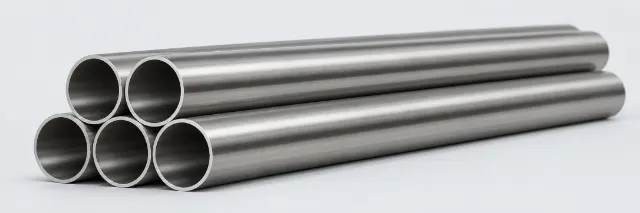 Tube & pipeφ1 – 219 × 0.25 – 25 mm
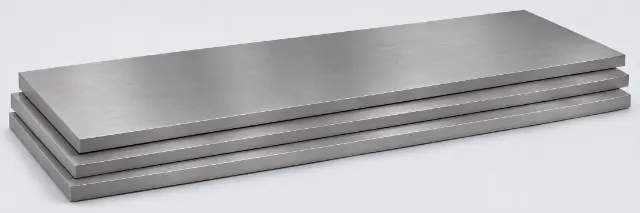 Plate4.76 – 80 mm
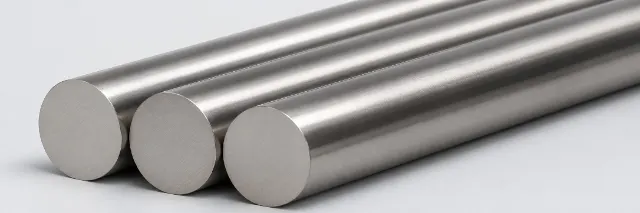 Barφ8 – 300 mm
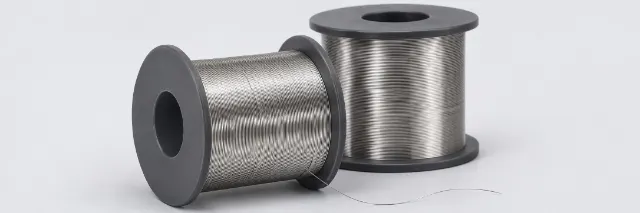 Wire & filler metalsφ0.01 – 8 mm
For this grade we can supply, against your service conditions:
- Tube, plate, strip, bar, forgings, wire and more — with size range and lead time
- Chemistry and mechanical test report (EN 10204 3.1 / 3.2)
- Like-for-like alternatives and selection advice
- Applicable standards and inspection scope
Or email us: info@kochlin.com