Hardness & wear
Hardness acceptance criterion Required by the standard
| Condition | Criterion |
|---|---|
| Investment casting | ≥ 37 HRC |
Hardness must be not lower than 37 HRC, or equivalent, determined to ASTM E18.
⚠ This is a MINIMUM — hardness is the functional property here, and anything below 37 HRC fails.
Composition, casting hardness and the quality requirements are acceptance tests, run on every lot.
⚠ "or equivalent" permits conversion to another hardness scale, but the conversion factors have to be agreed between purchaser and producer. If a certificate reports HBW or HV, establish which conversion table was used, or the 37 HRC line will not sit in the same place for the two parties.
⚠ Three cobalt wear alloys in the same family, three different directions of hardness requirement — read the direction before the number:
· R30006 (Stellite 6 castings) — not lower than 37 HRC: a minimum, because the hardness is the function;
· R30021 (Stellite 21 castings) — as-cast not higher than 34 HRC: a maximum, because the alloy age-hardens further in service;
· R30016 (Stellite 6B wrought) — 33 to 43 HRC: a two-sided band.
When you see a cobalt hardness figure, establish first whether it is a floor, a ceiling or a range.
What the standard says about wear service Informative only — not a basis for acceptance
Typical uses: nozzles, rubbing seals, rollers, guides and supports that need wear and/or erosion resistance together with corrosion and oxidation resistance, for service up to 1600 °F (870 °C); use is not limited to these.
⚠ This is a statement of use, not a performance guarantee. Three things to note:
(1) the wording is "have been used typically for", not "shall withstand";
(2) it closes with "but usage is not limited to such applications" — neither restricting nor promising;
(3) 870 °C is the temperature mentioned in that sentence, but the specification prescribes no elevated-temperature mechanical values and no wear figures at all; the only things it verifies are composition, casting hardness and quality.
Designing to wear data requires a separate manufacturer test report, with the test method and counterface stated.
Weld-deposit hardness across the family Informative only — not a basis for acceptance
| AWS classification / UNS | As-welded, multilayer | Carbides and trade-off |
|---|---|---|
| ERCoCr-A / R30006 | 23 – 47 HRC | Hypo-eutectic carbides; low-stress abrasion plus impact tolerance, good metal-to-metal galling resistance |
| ERCoCr-B / R30012 | 34 – 47 HRC | About 16% carbides; slightly higher hardness and abrasive and metal-to-metal wear resistance, slightly lower impact and corrosion resistance |
| ERCoCr-C / R30001 | 43 – 58 HRC | About 19% carbides, with primary hyper-eutectic carbides present; the highest wear resistance, with reduced impact and corrosion resistance and a greater tendency to check on cooling |
| ERCoCr-E / R30021 | 20 – 35 HRC | Low carbide fraction, mainly solid-solution strengthened; tough and work-hardening, resistant to thermal shock and cavitation, excellent self-mated galling resistance |
| ERCoCr-F / R30002 | 32 – 46 HRC | Over 20% nickel, developed for oxidation and corrosion resistance where lead additives are present |
| ERCoCr-G / R30014 | 52 – 60 HRC | A higher-carbon, higher-tungsten version of ERCoCr-C with a greater volume fraction of primary carbides |
| ERCoCr-H / R31233 | 20 – 30 HRC | A balance of wear and corrosion resistance; good resistance to weld cracking, deposited without a butter layer or preheat; the deposit work-hardens to as much as 50 HRC after cold working |
⚠ These are typical hardness values for multilayer welds in the as-welded condition — not an acceptance range: the body of the standard verifies only the chemical composition of the filler metal or weld metal, never hardness. Using this table to pass or fail a deposit is a misuse of it.
How to read it: the carbide fraction rises A → B → C → G and hardness rises with it, while impact toughness and corrosion resistance fall. E and H take the other route — low carbide, solid-solution strengthened, winning on toughness and work hardening. Choosing a grade means picking a point on that trade-off.
⚠ The bands are wide (ERCoCr-A spans 24 HRC points). As-welded hardness depends on dilution, the number of layers, preheat and interpass temperature; it is not a material constant. A single-layer deposit is diluted by the base metal and reads distinctly softer — A7.2.8 is about MULTILAYER welds.
⚠ The same UNS R30006 carries a MANDATORY "not lower than 37 HRC" as a casting and an INFORMATIVE 23-47 HRC as a weld deposit. Saying "Stellite 6 is about 40 HRC" without naming the product form says nothing: the two forms differ in basis, in weight and in range.
Two further points from A7.2.1.1 worth keeping: hot-hardness retention is stated to a maximum of 650 °C; and cobalt alloys undergo no allotropic transformation, so a subsequent heat treatment of the base metal does not destroy the deposit.
Condition as supplied and heat treatment Required by the standard
| Condition as supplied | As cast |
| UNS correspondence | The title reads "Composition similar to UNS R30006" — similar in composition, not identical |
| Radiographic control | Radiographic examination of each part number until foundry process controls are established |
| Acceptance grade | AMS2175 Grade C applies when none is specified |
| Repair restriction | No peening, plugging, impregnation or welding without the purchaser's authorisation |
⚠ The ban on unauthorised weld repair matters particularly for a wear casting: a repair leaves a softened heat-affected zone in a hard-phase matrix, so a part that passes the hardness check can still wear through at the repair first. If weld repairs are to be allowed, the order must call for AMS2694 or another welding procedure acceptable to the purchaser.
⚠ The title block claims only that the composition is similar to UNS R30006. Buying to the UNS number and receiving to AMS5387 are not automatically the same thing; the contract should say which governs.
Chemical composition
Nominal: mid-range where both limits are given, the cap where only a maximum is, balance takes the remainder. Exact specified ranges below.
| Element | Name | Content % | |
|---|---|---|---|
| Main elements4 elements | |||
| Co | Cobalt | Bal. | |
| Cr | Chromium | 27 – 31% | |
| W | Tungsten | 3.5 – 5.5% | |
| C | Carbon | 0.9 – 1.4% | |
| Element | Name | Content % | |
|---|---|---|---|
| Minor & residual5 elements | |||
| Ni | Nickel | ≤ 3% | |
| Mo | Molybdenum | ≤ 1.5% | |
| Fe | Iron | ≤ 3% | |
| Si | Silicon | ≤ 1.5% | |
| Mn | Manganese | ≤ 1% | |
Mechanical minima by form
Guaranteed values differ by form, size and delivery condition; quotations confirm the specification, form, size and condition.
| Form | Condition | Rm MPa | Rp0.2 MPa | A ≥ % |
|---|---|---|---|---|
| Wire and filler metals | ||||
| Solid surfacing wire and rod | AWS classification ERCoCr-A / UNS R30006 | — | — | — |
| Other | ||||
| Investment castings | As-cast, no heat treatment applies | — | — | — |
Where this grade is recommended
Matched in 1 service conditions; ranks and scores computed from the condition-scoring matrix.
| Service condition | Industry | Temperature | Rank | Score |
|---|---|---|---|---|
| Valves, fittings & flanges | Oil & Gas | 150 – 300 °C | 2 / 14 | 88 |
Designations & equivalents
| EN designation | CoCr28W4C |
| Trade name(s) | Stellite 6 / GB StQ6 |
| AMS (SAE aerospace) | 5387 |
| AWS (welding) | A5.21 ERCoCr-A |
Cross-references are common near-equivalents for search and shortlisting; substitution across standards requires clause-by-clause verification. All grades in one cross-reference table →
Applicable standards
2 specifications. Name the standard and its edition on the order.
Guaranteed values and required tests differ between specifications — see Mechanical minima by form for the figures per form.
Frequently asked questions
What is Stellite 6 · UNS R30006?
Stellite 6 · UNS R30006 — Co-Cr-W (Stellite). The industry staple for valve-seat hardfacing and wear bushings
What is the maximum service temperature of R30006?
Typically about 800 °C; the practical limit depends on media, stress and design life — acceptance per the governing standard.
Which standards cover R30006?
SAE AMS5387 Stellite 6, AWS A5.21/A5.21M
Where is R30006 typically used?
Valves, fittings & flanges (Oil & Gas)
In which forms is R30006 available?
Tube, plate, strip, bar, forgings, wire and other forms — sizes and delivery condition confirmed per order, with EN 10204 3.1 / 3.2 certification.
Same series
Download PDF datasheet
This grade’s datasheet as an A4 PDF — for filing, printing or forwarding to colleagues.
Download PDF datasheetSupply & enquiry
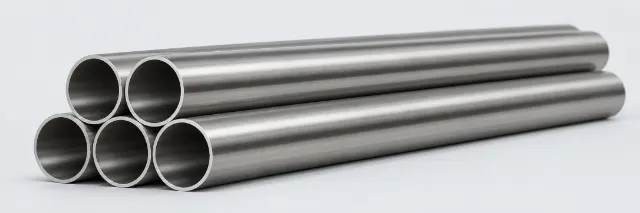 Tube & pipeφ1 – 219 × 0.25 – 25 mm
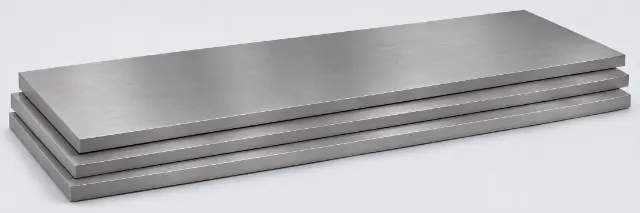 Plate4.76 – 80 mm
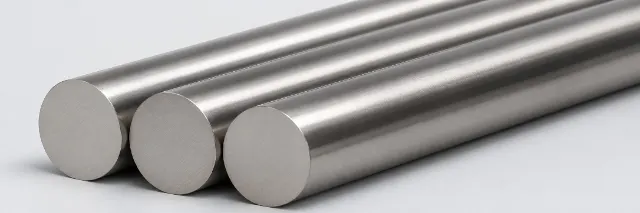 Barφ8 – 300 mm
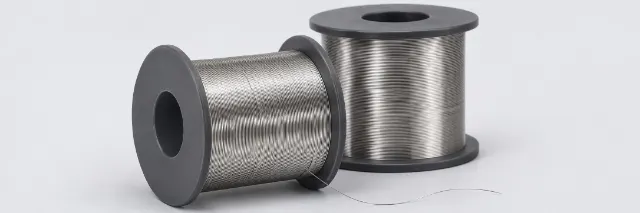 Wire & filler metalsφ0.01 – 8 mm
For this grade we can supply, against your service conditions:
- Tube, plate, strip, bar, forgings, wire and more — with size range and lead time
- Chemistry and mechanical test report (EN 10204 3.1 / 3.2)
- Like-for-like alternatives and selection advice
- Applicable standards and inspection scope
Or email us: info@kochlin.com