Physical properties
| Density | 8.3 | g/cm³ |
| Modulus E | 214 | GPa |
| Thermal conductivity | 12 | W/(m·K) |
| Thermal expansion | 13 | ×10⁻⁶/K |
| Specific heat | 0.43 | kJ/(kg·K) |
| Resistivity | 1.21 | Ω·mm²/m |
Informative values: they vary with composition, condition and test method. Use the governing standard or measured mill data for pressure and heat-transfer calculations.
Chemical composition
Nominal: mid-range where both limits are given, the cap where only a maximum is, balance takes the remainder. Exact specified ranges below.
| Element | Name | Content % | |
|---|---|---|---|
| Main elements6 elements | |||
| Ni | Nickel | ≥ 70% | |
| Cr | Chromium | 14 – 17% | |
| Fe | Iron | 5 – 9% | |
| Ti | Titanium | 2.25 – 2.75% | |
| Nb | Niobium | 0.7 – 1.2% | |
| Al | Aluminium | 0.4 – 1% | |
| Element | Name | Content % | |
|---|---|---|---|
| Minor & residual6 elements | |||
| C | Carbon | ≤ 0.08% | |
| Mn | Manganese | ≤ 1% | |
| Si | Silicon | ≤ 0.5% | |
| S | Sulphur | ≤ 0.01% | |
| Co | Cobalt | ≤ 1% | |
| Cu | Copper | ≤ 0.5% | |
Mechanical minima by form
Guaranteed values differ by form, size and delivery condition; quotations confirm the specification, form, size and condition.
| Form | Condition | Rm MPa | Rp0.2 MPa | A ≥ % | Other requirements and notes |
|---|---|---|---|---|---|
| Bar and forgings | |||||
| Bar and forgings | Type 1: solution treated at 1149 °C for 2–4 h, air cooled; stabilized at 843 °C for 24 h, air cooled; aged at 704 °C for 20 h | ≥ 965 (140 ksi) | ≥ 620 (90 ksi) | ≥ 8 | Also specified: Hardness ≥ 262 HBW |
| Bar and forgings (<63.5 mm) | Solution treated at Type 2: 982 °C, Double aged | ≥ 1170 (170 ksi) | ≥ 790 (115 ksi) | ≥ 18 | Also specified: Reduction of area Z ≥ 18 % · Hardness 302 HBW – 363 HBW |
| Bar and forgings (63.5–101.6 mm) | Solution treated at Type 2: 982 °C, Double aged | ≥ 1170 (170 ksi) | ≥ 790 (115 ksi) | ≥ 15 | Also specified: Reduction of area Z ≥ 15 % · Hardness 302 HBW – 363 HBW |
| Bar and forgings | Type 3: solution treated at 1079–1121 °C for 1–2 h, air cooled; aged at 704 °C for 20 h | 1103 – 1276 | 689 – 896 | ≥ 20 | Also specified: Reduction of area Z ≥ 20 % · Hardness 267 HBW – 363 HBW |
| Bar and forgings | Cold-worked or solution treated by default, not aged | — | — | — | |
| Bars and forgings (aerospace, other than seamless rolled rings) | Fully heat treated: 1149 °C ±14 solution 2–4 h air cool, then 843 °C ±14 for 24 h and 704 °C ±14 for 20 h | ≥ 965 (140 ksi) | ≥ 552 (80 ksi) | ≥ 8 | Also specified: Reduction of area Z ≥ 8 % · Hardness 262 HBW – 341 HBW Applies up to 254 mm diameter or thickness. Hardness 262–341 HBW. |
| Flash-welded and seamless rolled rings (aerospace) | Fully heat treated: 1093–1149 °C solution 2–4 h, then 843 °C ±14 for 24 h and 704 °C ±14 for 20 h | ≥ 862 (125 ksi) | ≥ 552 (80 ksi) | ≥ 8 | Also specified: Reduction of area Z ≥ 8 % · Hardness 262 HBW – 341 HBW Applies up to 254 mm diameter or thickness. |
| Long products ≤160 mm (EN 10302, 2.4669) | +P980 (precipitation hardened) | ≥ 980 | ≥ 630 | ≥ 8 | +P980 is not specified for flat products. |
| Plate, sheet and strip | |||||
| Strip (aerospace) | Annealed, t <0.25 mm | ≤ 965 | — | — | Tensile and yield are maxima (annealed / solution-treated, soft). Elongation is not assessed in this band. |
| Strip (aerospace) | Annealed, t 0.25–0.64 mm | ≤ 896 | — | ≥ 20 | Tensile and yield are maxima (annealed / solution-treated, soft). |
| Sheet (aerospace) | Annealed, t 0.25–0.61 mm | ≤ 965 | — | ≥ 30 | Also specified: Bend radius 1T (T = specimen thickness) Tensile and yield are maxima (annealed / solution-treated, soft). Bend test: 1T up to 1.27 mm, 2T from 1.27 to 4.76 mm. |
| Sheet (aerospace) | Annealed, t >0.61–3.18 mm | ≤ 896 | ≤ 414 | ≥ 40 | Also specified: Bend radius 2T (T = specimen thickness) As above |
| Sheet (aerospace) | Annealed, t >3.18–4.76 mm | ≤ 896 | ≤ 448 | ≥ 40 | Also specified: Bend radius 2T (T = specimen thickness) As above |
| Strip (aerospace) | Solution heat treated, t <0.25 mm | ≤ 965 | — | — | Tensile and yield are maxima (annealed / solution-treated, soft). Applies to 0.12 mm and over. |
| Strip (aerospace) | Solution heat treated, t 0.25–4.75 mm | ≤ 931 | — | ≥ 18 | Tensile and yield are maxima (annealed / solution-treated, soft). |
| Sheet (aerospace) | Solution heat treated, t 0.25–0.61 mm | ≤ 931 | ≤ 517 | ≥ 30 | As above |
| Sheet (aerospace) | Solution heat treated, t >0.61–4.75 mm | ≤ 931 | ≤ 517 | ≥ 35 | As above |
| Wire and filler metals | |||||
| Spring wire, No. 1 Temper (aerospace) | As received, dia. or thickness ≤0.64 mm | ≤ 1034 | — | — | Tensile is a maximum. Wrap test: five close turns without cracking. Must also meet the aged properties after 732 °C × 16 h. |
| Spring wire, No. 1 Temper (aerospace) | As received, dia. or thickness >0.64–12.70 mm | 896 – 1138 | — | — | Wrap test: five close turns without cracking. Must also meet the aged properties after 732 °C × 16 h. |
| Several forms | |||||
| Long products ≤160 mm and flat products ≤20 mm (EN 10302, 2.4669) | +P1170 (precipitation hardened) | ≥ 1170 | ≥ 790 | ≥ 15 | Flat products under 3 mm: A five points lower. |
Hardness requirement
Required by the standard — Type 1 ≥ 262 HB (26 HRC min); Type 2 302–363 HB (32–40 HRC); Type 3 267–363 HB (27–40 HRC)
⚠ The four Types differ sharply in both heat treatment and acceptance values, so the order must name the Type.
More detail 3
Type 1 (2100 °F solution + stabilize + age): tensile ≥965 MPa but only 8% elongation.
Type 2 (1800 °F solution + age): tensile ≥1170 MPa, 18% elongation.
Type 3 (2000 °F solution anneal + age): tensile is a two-sided band, 1103–1276 MPa.
Thermal expansion and elastic modulus
| Temperature range | Mean coefficient ×10⁻⁶/K |
|---|---|
| 20–200 °C | 13 |
| 20–300 °C | 13.4 |
| 20–400 °C | 13.9 |
| 20–600 °C | 14.8 |
Elastic modulus vs temperature
| Temp °C | E GPa |
|---|---|
| 20 | 214 |
| 100 | 206 |
| 200 | 202 |
| 300 | 196 |
| 400 | 190 |
| 500 | 185 |
| 600 | 180 |
| 700 | 171 |
| 800 | 161 |
| 900 | 149 |
| 1000 | 135 |
Stress-rupture requirement
| Heat treatment | Solution at 2100 °F (1149 °C) + stabilize + precipitation harden (Type 1) |
| Test temperature | 1350 °F (732 °C) |
| Test stress | 45 000 psi (310 MPa) |
| Minimum life | ≥ 100 h |
| Elongation | ≥ 5 % |
If the test runs beyond 136 h, the minimum elongation drops to 3%.
This is a pass/fail acceptance test, not a design creep curve.
Where this grade is recommended
Matched in 4 service conditions; ranks and scores computed from the condition-scoring matrix.
| Service condition | Industry | Temperature | Rank | Score |
|---|---|---|---|---|
| Turbo & hot fasteners | Automotive & Racing | 850 – 1050 °C | 1 / 4 | 90 |
| HT fasteners & springs | Power & Nuclear | 400 – 650 °C | 3 / 7 | 88 |
| HT bolting & seal rings | Aerospace | 650 – 900 °C | 2 / 6 | 87 |
| Logging cable & tool housing | Oil & Gas | 150 – 260 °C | 5 / 6 | 78 |
Designations & equivalents
| W.Nr. (Germany) | 2.4669 |
| EN designation | NiCr15Fe7TiAl |
| Trade name(s) | Inconel X-750 / Nicrofer 7016 |
| ASTM / AISI | B637 |
| AMS (SAE aerospace) | 5542 / 5598 / 5667 / 5668 / 5670 / 5671 / 5698 / 5699 / 5747 |
| BS (UK) | HR 505 (wire) |
| NACE sour service | ISO 15156-3: non-pressure-containing valve parts (≤35 HRC) and springs (≤50 HRC) only |
| JIS (Japan) | NCF750 |
Cross-references are common near-equivalents for search and shortlisting; substitution across standards requires clause-by-clause verification. All grades in one cross-reference table →
Applicable standards
11 specifications. Name the standard and its edition on the order.
Guaranteed values and required tests differ between specifications — see Mechanical minima by form for the figures per form.
Frequently asked questions
What is Alloy X-750 (GH4145) · UNS N07750?
Alloy X-750 (GH4145) · UNS N07750 — Ni superalloys. Precipitation-hardened — springs and fasteners, 700 °C class
What is the maximum service temperature of N07750?
Typically about 700 °C; the practical limit depends on media, stress and design life — acceptance per the governing standard.
What is the tensile strength of N07750?
The specified minimum tensile strength is 965 MPa for the main product form. Minima for other forms and sizes are listed under "Mechanical minima by form" on this page.
Which standards cover N07750?
ASTM B637, AMS 5542, AMS 5598, AMS 5667, AMS 5668, AMS 5670, AMS 5671, AMS 5698, AMS 5699, AMS 5747, EN 10302 (creep-resisting steels, nickel and cobalt alloys)
Where is N07750 typically used?
Turbo & hot fasteners (Automotive & Racing); HT fasteners & springs (Power & Nuclear); HT bolting & seal rings (Aerospace); Logging cable & tool housing (Oil & Gas)
In which forms is N07750 available?
Tube, plate, strip, bar, forgings, wire and other forms — sizes and delivery condition confirmed per order, with EN 10204 3.1 / 3.2 certification.
Same series
Download PDF datasheet
This grade’s datasheet as an A4 PDF — for filing, printing or forwarding to colleagues.
Download PDF datasheetSupply & enquiry
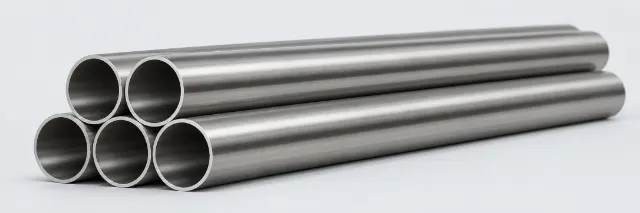 Tube & pipeφ1 – 219 × 0.25 – 25 mm
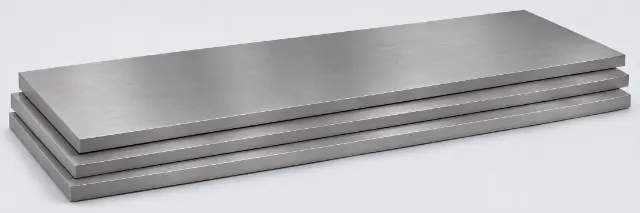 Plate4.76 – 80 mm
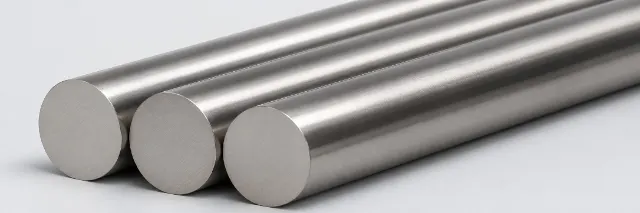 Barφ8 – 300 mm
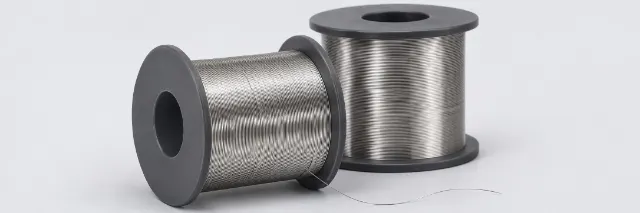 Wire & filler metalsφ0.01 – 8 mm
For this grade we can supply, against your service conditions:
- Tube, plate, strip, bar, forgings, wire and more — with size range and lead time
- Chemistry and mechanical test report (EN 10204 3.1 / 3.2)
- Like-for-like alternatives and selection advice
- Applicable standards and inspection scope
Or email us: info@kochlin.com