Hardness & wear
Weld-deposit hardness across the family Informative only — not a basis for acceptance
| AWS classification / UNS | As-welded, multilayer | Carbides and trade-off |
|---|---|---|
| ERCoCr-A / R30006 | 23 – 47 HRC | Hypo-eutectic carbides; low-stress abrasion plus impact tolerance, good metal-to-metal galling resistance |
| ERCoCr-B / R30012 | 34 – 47 HRC | About 16% carbides; slightly higher hardness and abrasive and metal-to-metal wear resistance, slightly lower impact and corrosion resistance |
| ERCoCr-C / R30001 | 43 – 58 HRC | About 19% carbides, with primary hyper-eutectic carbides present; the highest wear resistance, with reduced impact and corrosion resistance and a greater tendency to check on cooling |
| ERCoCr-E / R30021 | 20 – 35 HRC | Low carbide fraction, mainly solid-solution strengthened; tough and work-hardening, resistant to thermal shock and cavitation, excellent self-mated galling resistance |
| ERCoCr-F / R30002 | 32 – 46 HRC | Over 20% nickel, developed for oxidation and corrosion resistance where lead additives are present |
| ERCoCr-G / R30014 | 52 – 60 HRC | A higher-carbon, higher-tungsten version of ERCoCr-C with a greater volume fraction of primary carbides |
| ERCoCr-H / R31233 | 20 – 30 HRC | A balance of wear and corrosion resistance; good resistance to weld cracking, deposited without a butter layer or preheat; the deposit work-hardens to as much as 50 HRC after cold working |
⚠ These are typical hardness values for multilayer welds in the as-welded condition — not an acceptance range: the body of the standard verifies only the chemical composition of the filler metal or weld metal, never hardness. Using this table to pass or fail a deposit is a misuse of it.
How to read it: the carbide fraction rises A → B → C → G and hardness rises with it, while impact toughness and corrosion resistance fall. E and H take the other route — low carbide, solid-solution strengthened, winning on toughness and work hardening. Choosing a grade means picking a point on that trade-off.
⚠ The bands are wide (ERCoCr-A spans 24 HRC points). As-welded hardness depends on dilution, the number of layers, preheat and interpass temperature; it is not a material constant. A single-layer deposit is diluted by the base metal and reads distinctly softer — A7.2.8 is about MULTILAYER welds.
A7.2.2.2 states that ERCoCr-B and ERCoCr-A are "used interchangeably" and that "choice will depend on the specific application": take B for a little more wear resistance, A for a little more impact and corrosion resistance.
A7.2.2.1: ERCoCr-B weld metal can be machined with carbide tools — a practical dividing line between it and the harder ERCoCr-C.
Chemical composition
Nominal: mid-range where both limits are given, the cap where only a maximum is, balance takes the remainder. Exact specified ranges below.
| Element | Name | Content % | |
|---|---|---|---|
| Main elements4 elements | |||
| Co | Cobalt | Bal. | |
| Cr | Chromium | 26 – 32% | |
| W | Tungsten | 7 – 9.5% | |
| C | Carbon | 1.2 – 1.7% | |
| Element | Name | Content % | |
|---|---|---|---|
| Minor & residual8 elements | |||
| Ni | Nickel | ≤ 3% | |
| Mo | Molybdenum | ≤ 1% | |
| Fe | Iron | ≤ 3% | |
| Si | Silicon | ≤ 2% | |
| Mn | Manganese | ≤ 1% | |
| P | Phosphorus | ≤ 0.03% | |
| S | Sulphur | ≤ 0.03% | |
| Other | Other elements, total | ≤ 0.5% | |
Mechanical minima by form
Guaranteed values differ by form, size and delivery condition; quotations confirm the specification, form, size and condition.
| Form | Condition | Rm MPa | Rp0.2 MPa | A ≥ % | Other requirements and notes |
|---|---|---|---|---|---|
| Solid surfacing wire and rod | AWS classification ERCoCr-B / UNS R30012, as supplied | — | — | — | |
| Multilayer weld deposit | As-welded, typical values | — | — | — | Also specified: Hardness 34 HRC – 47 HRC |
Where this grade is recommended
Matched in 1 service conditions; ranks and scores computed from the condition-scoring matrix.
| Service condition | Industry | Temperature | Rank | Score |
|---|---|---|---|---|
| Valves, fittings & flanges | Oil & Gas | > 300 °C | 6 / 14 | 85 |
Designations & equivalents
| EN designation | CoCr29W9C |
| Trade name(s) | Stellite 12 |
| AWS (welding) | A5.21 ERCoCr-B |
Cross-references are common near-equivalents for search and shortlisting; substitution across standards requires clause-by-clause verification. All grades in one cross-reference table →
Applicable standards
Name the standard and its edition on the order.
Frequently asked questions
What is Stellite 12 · UNS R30012?
Stellite 12 · UNS R30012 — Co-Cr-W (Stellite). Between 1 and 6 in hardness — saw tips, sleeves, trimming dies
What is the maximum service temperature of R30012?
Typically about 800 °C; the practical limit depends on media, stress and design life — acceptance per the governing standard.
Which standards cover R30012?
AWS A5.21/A5.21M
Where is R30012 typically used?
Valves, fittings & flanges (Oil & Gas)
In which forms is R30012 available?
Tube, plate, strip, bar, forgings, wire and other forms — sizes and delivery condition confirmed per order, with EN 10204 3.1 / 3.2 certification.
Same series
Download PDF datasheet
This grade’s datasheet as an A4 PDF — for filing, printing or forwarding to colleagues.
Download PDF datasheetSupply & enquiry
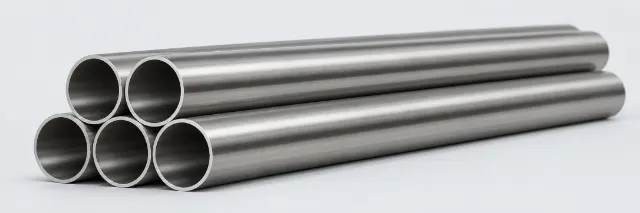 Tube & pipeφ1 – 219 × 0.25 – 25 mm
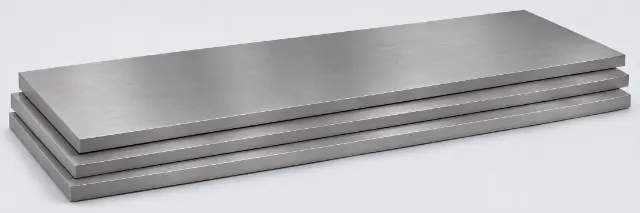 Plate4.76 – 80 mm
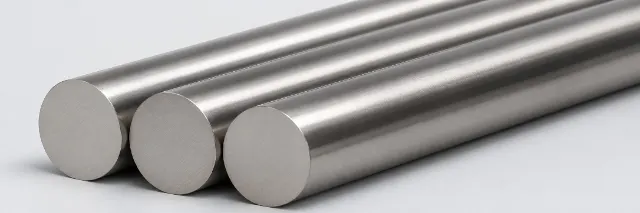 Barφ8 – 300 mm
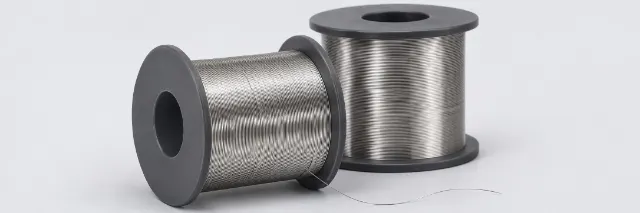 Wire & filler metalsφ0.01 – 8 mm
For this grade we can supply, against your service conditions:
- Tube, plate, strip, bar, forgings, wire and more — with size range and lead time
- Chemistry and mechanical test report (EN 10204 3.1 / 3.2)
- Like-for-like alternatives and selection advice
- Applicable standards and inspection scope
Or email us: info@kochlin.com