Physical properties
| Density | 8.05 | g/cm³ |
Informative values: they vary with composition, condition and test method. Use the governing standard or measured mill data for pressure and heat-transfer calculations.
Chemical composition
Nominal: mid-range where both limits are given, the cap where only a maximum is, balance takes the remainder. Exact specified ranges below.
| Element | Name | Content % | |
|---|---|---|---|
| Main elements8 elements | |||
| Ni | Nickel | Bal. | |
| Cr | Chromium | 23.5 – 25.5% | |
| Co | Cobalt | 15 – 22% | |
| Ti | Titanium | 0.5 – 2.5% | |
| Nb+Ta | Niobium + tantalum | 0.5 – 2.5% | |
| Al | Aluminium | 0.2 – 2% | |
| C | Carbon | 0.005 – 0.08% | |
| B | Boron | 0.0006 – 0.006% | |
| Element | Name | Content % | |
|---|---|---|---|
| Minor & residual7 elements | |||
| Fe | Iron | ≤ 3% | |
| Mo | Molybdenum | ≤ 2% | |
| Mn | Manganese | ≤ 1% | |
| Si | Silicon | ≤ 1% | |
| P | Phosphorus | ≤ 0.03% | |
| S | Sulphur | ≤ 0.03% | |
| Cu | Copper | ≤ 0.5% | |
Mechanical minima by form
Guaranteed values differ by form, size and delivery condition; quotations confirm the specification, form, size and condition.
| Form | Condition | Rm MPa | Rp0.2 MPa | A ≥ % | Other requirements and notes |
|---|---|---|---|---|---|
| Bar and forgings | |||||
| Bar and forgings | Solution treated, precipitation hardened | ≥ 1035 (150 ksi) | ≥ 620 (90 ksi) | ≥ 20 | Also specified: Reduction of area Z ≥ 18 % |
| Tube and pipe | |||||
| Seamless pipe and tube | Solution annealed, precipitation hardened | ≥ 1035 (150 ksi) | ≥ 620 (90 ksi) | ≥ 20 | |
| Several forms | |||||
| Section I boiler tube, plate, welded pipe, bar, forgings and fittings | Final condition, solution treated and aged | ≥ 1035 (150 ksi) | ≥ 620 (90 ksi) | ≥ 20 | |
| Other | |||||
| Section I boiler intermediate product | Solution annealed only, specification suffix Y | ≥ 724 (105 ksi) | ≥ 414 (60 ksi) | ≥ 30 | |
Allowable stress
This is neither a material strength nor an acceptance criterion. Allowable stresses already carry the code safety factors and are issued by the code for wall-thickness and pressure calculations to ASME BPVC — do not compare them directly with Rm or Rp0.2.
| Metal temperature not exceeding, °C | Max allowable stress, MPa |
|---|---|
| −30 – 40 | 295 |
| 65 | 295 |
| 100 | 295 |
| 150 | 295 |
| 200 | 294 |
| 250 | 285 |
| 300 | 279 |
| 325 | 277 |
| 350 | 276 |
| 375 | 276 |
| 400 | 276 |
| 425 | 276 |
| 450 | 276 |
| 475 | 276 |
| 500 | 276 |
| 525 | 276 |
| 550 | 276 |
| 575 | 276 |
| 600 | 274 |
| 625 | 269 |
| 650 | 226 † |
| 675 | 183 † |
| 700 | 146 † |
| 725 | 113 † |
| 750 | 84.1 † |
| 775 | 59.1 † |
| 800 | 34.5 † |
† Values at 650 °C and above are derived from time-dependent properties (creep-governed): allowable stress in that range falls with hold time, so the design life must match the code assumption.
⚠ Maximum use temperature is 800 °C. Rows above it are provided for interpolation only and do not imply the material may be used there.
A weld efficiency factor of 0.85 additionally applies to welded tubing and welded fittings.
Weld strength reduction factors — solution annealed and aged weldments (filler SFA-5.14 ERNiCrCo-1)
| Temp °C | 593 | 621 | 649 | 677 | 704 | 732 | 760 | 788 | 816 |
|---|---|---|---|---|---|---|---|---|---|
| WSRF | 0.9 | 0.9 | 0.9 | 0.9 | 0.9 | 0.9 | 0.9 | 0.9 | 0.9 |
There is also a "welded direct aged" factor at a flat 0.7 across the whole range — a fifth lower than solution annealed and aged.
More detail 1
Whether the weldment is re-solutionised after welding decides which factor applies.
Weld strength reduction factors — SMAW welds with the specified deposit composition
| Temp °C | 593 | 621 | 649 | 677 | 704 | 732 | 760 | 788 | 816 |
|---|---|---|---|---|---|---|---|---|---|
| WSRF | 0.8 | 0.8 | 0.8 | 0.7 | 0.7 | 0.6 | 0.6 | 0.5 | 0.4 |
⚠ The reduction for SMAW welds worsens sharply with temperature: 0.8 at 593 °C, only 0.5 by 788 °C and 0.4 at 816 °C — while solution annealed and aged weldments hold a flat 0.9 across the whole range.
More detail 2
In other words, above 700 °C the choice between SMAW and a process whose weldment can be re-solutionised is worth a factor of two in load capacity.
This is a direct basis for selecting the welding process, not advisory guidance.
These allowable stresses apply under ASME Code Case 2702-8, which covers UNS N07740 seamless tubing and the other listed product forms, including wrought fittings.
More detail 2
The material must meet the specified chemistry and mechanical properties (tensile ≥1035 MPa, yield ≥620 MPa, elongation ≥20%), and local aging heat treatment is not permitted.
Note that this is a Code Case rather than the body of ASME BPVC — before relying on it, confirm that the code edition governing the project accepts the case.
Stress-rupture requirement
| Heat treatment | Solution + precipitation hardened |
| Test temperature | 1472 °F (800 °C) |
| Test stress | 41 700 psi (288 MPa) |
| Minimum life | ≥ 23 h |
| Elongation | ≥ 5 % |
This is a pass/fail acceptance test, not a design creep curve.
Where this grade is recommended
Matched in 3 service conditions; ranks and scores computed from the condition-scoring matrix.
| Service condition | Industry | Temperature | Rank | Score |
|---|---|---|---|---|
| HT boiler & superheater | Power & Nuclear | 600 – 700 °C | 1 / 6 | 92 |
| HT fasteners & springs | Power & Nuclear | > 650 °C | 1 / 7 | 88 |
| Gas-turbine hot section | Power & Nuclear | 800 – 950 °C | 7 / 10 | 85 |
Designations & equivalents
| Trade name(s) | Inconel 740H |
| ASTM / AISI | B637 / B983 |
Cross-references are common near-equivalents for search and shortlisting; substitution across standards requires clause-by-clause verification. All grades in one cross-reference table →
Applicable standards
7 specifications. Name the standard and its edition on the order.
Guaranteed values and required tests differ between specifications — see Mechanical minima by form for the figures per form.
Frequently asked questions
What is Inconel 740H · UNS N07740?
Inconel 740H · UNS N07740 — Ni superalloys. Advanced ultra-supercritical (A-USC) — 700 °C power-boiler superheaters and headers
What is the maximum service temperature of N07740?
Typically about 800 °C; the practical limit depends on media, stress and design life — acceptance per the governing standard.
What is the tensile strength of N07740?
The specified minimum tensile strength is 1035 MPa for the main product form. Minima for other forms and sizes are listed under "Mechanical minima by form" on this page.
Which standards cover N07740?
ASTM B983, ASTM B637, ASTM B872, ASTM B1007, ASTM B366, ASME BPVC Code Case 2702-8 Section I, AWS A5.14
Where is N07740 typically used?
HT boiler & superheater (Power & Nuclear); HT fasteners & springs (Power & Nuclear); Gas-turbine hot section (Power & Nuclear)
In which forms is N07740 available?
Tube, plate, strip, bar, forgings, wire and other forms — sizes and delivery condition confirmed per order, with EN 10204 3.1 / 3.2 certification.
Same series
Download PDF datasheet
This grade’s datasheet as an A4 PDF — for filing, printing or forwarding to colleagues.
Download PDF datasheetSupply & enquiry
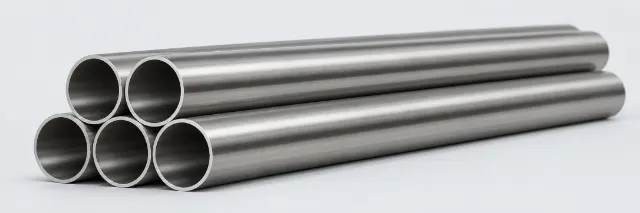 Tube & pipeφ1 – 219 × 0.25 – 25 mm
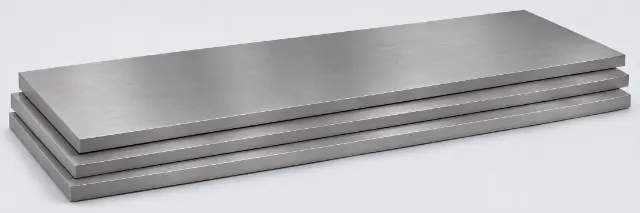 Plate4.76 – 80 mm
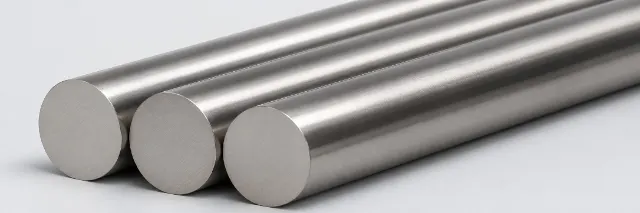 Barφ8 – 300 mm
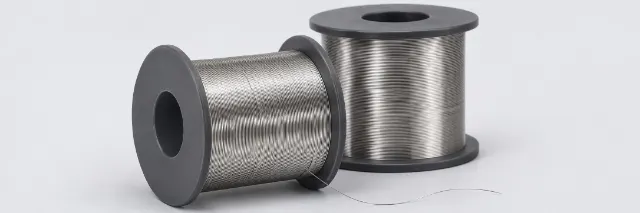 Wire & filler metalsφ0.01 – 8 mm
For this grade we can supply, against your service conditions:
- Tube, plate, strip, bar, forgings, wire and more — with size range and lead time
- Chemistry and mechanical test report (EN 10204 3.1 / 3.2)
- Like-for-like alternatives and selection advice
- Applicable standards and inspection scope
Or email us: info@kochlin.com