Recrystallisation & hot strength
Metallurgical condition as supplied Required by the standard
| Form | Available condition |
|---|---|
| Plate, sheet, strip and foil (default) | Annealed, defined as at least 90% recrystallised |
| Cold-worked or stress-relieved temper | May be specified in the purchase order |
| Elevated-temperature mechanical properties | The 1100 °C ± 15 °C minima (145 / 110 MPa, 20% elongation) are specified, but room temperature is the default; the elevated-temperature requirement has to be specified at the time of purchase |
Unless otherwise stated, material is supplied in the annealed condition, meaning at least 90 % recrystallized.
This matches niobium: annealed means at least 90 % recrystallised, and it is the default. C103 follows the same family rule as unalloyed niobium and Nb-1Zr.
⚠ The elevated-temperature requirement has two layers. Minima are given BOTH at room temperature and at 2000 °F ± 25 °F (1100 °C ± 15 °C), so the values are fixed and do not have to be negotiated. By default, however, only the room-temperature properties apply, and elevated-temperature properties apply only if the purchaser specifies them when ordering. To get the 1100 °C row you must call it out on the order; if you do not, the certificate will carry no high-temperature data and that is not a non-conformance.
⚠ One detail: the room-temperature minima are banded by thickness (385/275 MPa at ≤1.3 mm, 370/260 MPa above it), whereas the 1100 °C minima are IDENTICAL for both thickness classes (145/110 MPa, 20 % elongation). The thickness effect disappears at temperature, where annealing and heat erase the cold-work history.
Protective annealing atmosphere Required by the standard, conditionally
Not permitted — No protective annealing atmosphere is prescribed; the safeguard is the finished-product interstitial limits, tested only when the order calls for them.
The largest difference between the ingot and finished-product limits is oxygen: 0.025 rising to 0.035. Carbon, nitrogen and hydrogen are the same in both (0.015 / 0.010 / 0.0015).
⚠ That only oxygen is relaxed says that oxygen is what the material picks up during processing and annealing. C103 carries 9-11 % hafnium and 0.7-1.3 % titanium, both strong oxygen getters, so the annealing atmosphere has to be high vacuum or high-purity inert gas or even the 0.035 finished-product limit will not hold.
⚠ Finished-product interstitials are tested only when the purchase order specifies it. Leave it out and they are never measured — a real gap for an alloy whose ductility depends on them, so high-temperature buyers should put it on the order.
Chemical composition
Nominal: mid-range where both limits are given, the cap where only a maximum is, balance takes the remainder. Exact specified ranges below.
| Element | Name | Content % | |
|---|---|---|---|
| Main elements3 elements | |||
| Nb | Niobium | Bal. | |
| Hf | Hafnium | 9 – 11% | |
| Ti | Titanium | 0.7 – 1.3% | |
| Element | Name | Content % | |
|---|---|---|---|
| Minor & residual7 elements | |||
| Zr | Zirconium | ≤ 0.7% | |
| W | Tungsten | ≤ 0.5% | |
| Ta | Tantalum | ≤ 0.5% | |
| C | Carbon | ≤ 0.015% | |
| O | Oxygen | ≤ 0.0225% | |
| N | Nitrogen | ≤ 0.015% | |
| H | Hydrogen | ≤ 0.0015% | |
Mechanical minima by form
Guaranteed values differ by form, size and delivery condition; quotations confirm the specification, form, size and condition.
| Form | Condition | Rm MPa | Rp0.2 MPa | A ≥ % | Other requirements and notes |
|---|---|---|---|---|---|
| Bar and forgings | |||||
| Bar, rod and extruded shapes | Hot or cold finished, descaled and recrystallization annealed | ≥ 372 (54 ksi) | ≥ 241 (35 ksi) | ≥ 15 | |
| Plate, sheet and strip | |||||
| Sheet, strip and plate | Descaled, recrystallised, ≤3.18 mm | ≥ 372 (54 ksi) | ≥ 276 (40 ksi) | ≥ 20 | |
| Sheet, strip and plate | Descaled, recrystallised, >3.18 mm | ≥ 372 (54 ksi) | ≥ 262 (38 ksi) | ≥ 20 | |
| Foil, sheet, strip and plate | Annealed (≥90% recrystallized), t ≤1.3 mm, room temperature | ≥ 385 (56 ksi) | ≥ 275 (40 ksi) | ≥ 20 | Elongation over a 1 in. (25 mm) gauge length. |
| Foil, sheet, strip and plate | Annealed (≥90% recrystallized), t ≤1.3 mm, tensile at 1100 °C ±15 | ≥ 145 (21 ksi) | ≥ 110 (16 ksi) | ≥ 20 | Elongation over a 1 in. (25 mm) gauge length. Also required at 1100 °C: 145 / 110 MPa, elongation ≥20%. |
| Foil, sheet, strip and plate | Annealed (≥90% recrystallized), t >1.3 mm, room temperature | ≥ 370 (54 ksi) | ≥ 260 (38 ksi) | ≥ 20 | Elongation over a 1 in. (25 mm) gauge length. |
| Foil, sheet, strip and plate | Annealed (≥90% recrystallized), t >1.3 mm, tensile at 1100 °C ±15 | ≥ 145 (21 ksi) | ≥ 110 (16 ksi) | ≥ 20 | Elongation over a 1 in. (25 mm) gauge length. Also required at 1100 °C: 145 / 110 MPa, elongation ≥20%. |
Where this grade is recommended
Matched in 1 service conditions; ranks and scores computed from the condition-scoring matrix.
| Service condition | Industry | Temperature | Rank | Score |
|---|---|---|---|---|
| Exhaust & afterburner | Aerospace | 700 – 950 °C | 8 / 8 | 75 |
Designations & equivalents
| UNS | R04295 |
| EN designation | Nb-10Hf-1Ti |
| Trade name(s) | C-103 / WC-103 |
| ASTM / AISI | B652 / B654 |
| AMS (SAE aerospace) | 7852 / 7857 |
Cross-references are common near-equivalents for search and shortlisting; substitution across standards requires clause-by-clause verification. All grades in one cross-reference table →
Applicable standards
4 specifications. Name the standard and its edition on the order.
Guaranteed values and required tests differ between specifications — see Mechanical minima by form for the figures per form.
Frequently asked questions
What is C-103 Niobium-Hafnium (Nb-10Hf-1Ti)?
C-103 Niobium-Hafnium (Nb-10Hf-1Ti) — Tantalum / Niobium. Coated, the liquid-rocket nozzle alloy — 1300 °C-class Nb-10Hf-1Ti
What is the maximum service temperature of C103?
Typically about 1300 °C; the practical limit depends on media, stress and design life — acceptance per the governing standard.
What is the tensile strength of C103?
The specified minimum tensile strength is 372 MPa for the main product form. Minima for other forms and sizes are listed under "Mechanical minima by form" on this page.
Which standards cover C103?
SAE AMS 7852 C-103, SAE AMS 7857 C-103, ASTM B654/B654M, ASTM B652/B652M
Where is C103 typically used?
Exhaust & afterburner (Aerospace)
In which forms is C103 available?
Tube, plate, strip, bar, forgings, wire and other forms — sizes and delivery condition confirmed per order, with EN 10204 3.1 / 3.2 certification.
Same series
Download PDF datasheet
This grade’s datasheet as an A4 PDF — for filing, printing or forwarding to colleagues.
Download PDF datasheetSupply & enquiry
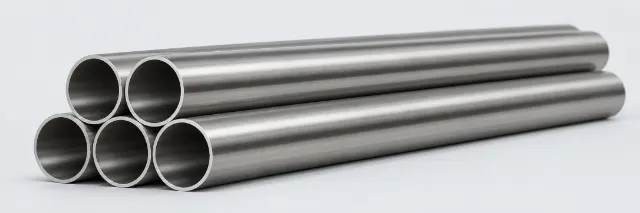 Tube & pipeφ1 – 219 × 0.25 – 25 mm
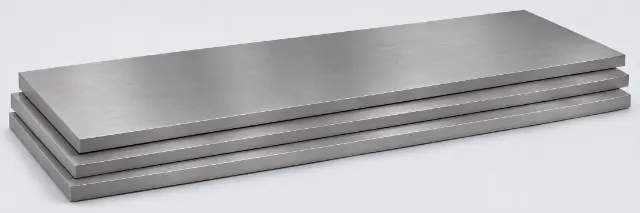 Plate4.76 – 80 mm
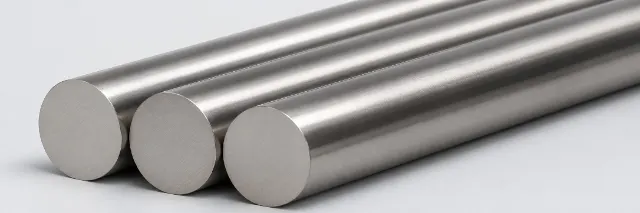 Barφ8 – 300 mm
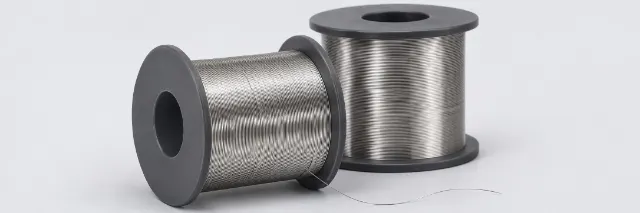 Wire & filler metalsφ0.01 – 8 mm
For this grade we can supply, against your service conditions:
- Tube, plate, strip, bar, forgings, wire and more — with size range and lead time
- Chemistry and mechanical test report (EN 10204 3.1 / 3.2)
- Like-for-like alternatives and selection advice
- Applicable standards and inspection scope
Or email us: info@kochlin.com